E-Commerce Payment Processing That Keeps More of Every Online Sale
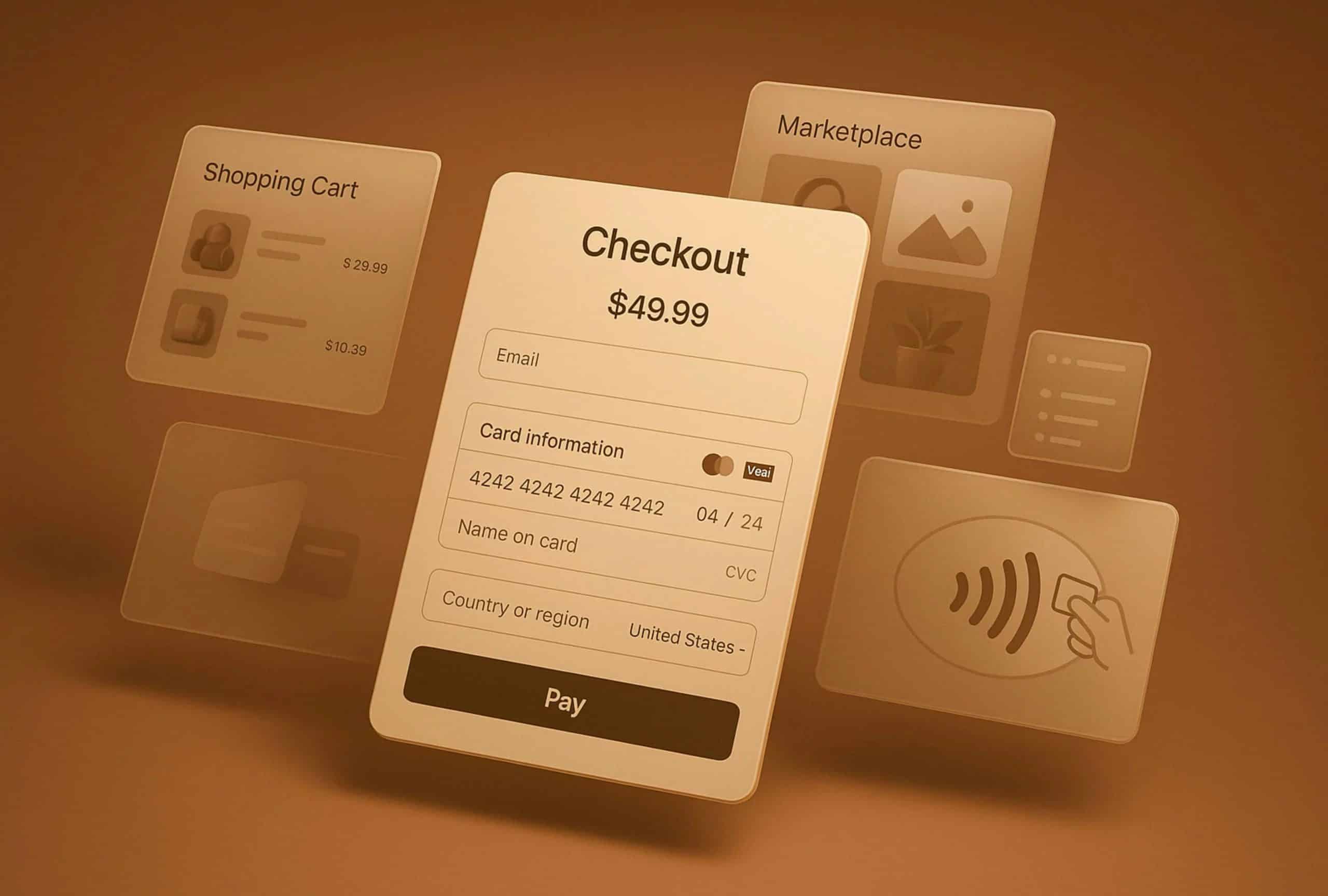
E-commerce payment processing for online stores, SaaS businesses, and custom checkout flows. Every ecommerce payment moves through a merchant account, a gateway, and the card networks — and the pricing model you’re on determines how much of each transaction you keep. Brookside provides interchange-plus pricing, major gateway support, and dedicated service — commonly reducing effective rate by 0.4–0.8% versus flat-rate processors like Stripe or Square at meaningful volume. According to Federal Reserve interchange fee data, most e-commerce businesses overpay significantly by defaulting to flat-rate pricing that doesn’t reflect their actual card mix.
For merchants who have outgrown flat-rate aggregators, Square alternatives built on real merchant accounts typically cut effective rates by 20–35%.
Why E-Commerce Merchants Overpay on Flat-Rate Processors
Stripe charges 2.9% + $0.30 per online transaction. Square charges the same. These flat rates apply regardless of card type — meaning you pay the same percentage for a basic debit card as for a premium airline rewards card, even though those two cards cost the processor very different amounts.
Online credit card processing under interchange-plus pricing separates each card’s actual cost from the processor’s fixed markup. You pay the actual interchange cost for each card type plus a fixed processor markup. For online merchants with a typical consumer card mix, this commonly reduces effective rate by 0.4–0.8 percentage points. On $100,000/month in volume that’s $400–$800/month — $4,800–$9,600/year. For why tiered and flat-rate pricing consistently cost more, read how tiered pricing works. The Square account freeze post explains the account stability risk that comes with payment facilitator models. See CFPB guidance on card payments for consumer protection context on online transactions.
Get a Free Cost AnalysisDual Pricing for E-Commerce
For online businesses with strong direct traffic, dual pricing displays separate cash-equivalent and card prices at checkout — shifting the processing cost to the card-paying customer. The result is a near-zero effective rate for the merchant. Read the dual pricing vs. cash discount comparison to understand which model fits your checkout flow.
E-Commerce Payment Gateway & Platform Integration
Brookside ecommerce merchant services include integration with most major payment gateways and e-commerce platforms. The right ecommerce payment gateway connects your checkout directly to your merchant account without adding unnecessary markup:
- Authorize.net, NMI, and other major gateways
- WooCommerce, Shopify, BigCommerce, and Magento
- Custom API integration for proprietary checkout flows
- Hosted payment pages for lower PCI compliance scope
- Recurring billing and subscription payment support
If you’re currently using Stripe or Square and want to migrate, Brookside reviews your current integration as part of the onboarding process. Most WooCommerce and standard platform migrations are a configuration change rather than a development project. Understanding what a merchant account is and how it differs from payment facilitator platforms is worth reading before you switch. The bank merchant services call post explains why your existing banking relationship is rarely the best option for e-commerce accounts. When you’re ready to move, read how to switch payment processors without losing a day of sales.
Account Stability and Card Type Mix
Dedicated merchant accounts vs. payment facilitators
E-commerce businesses using Stripe or Square operate as sub-merchants under a payment facilitator’s master account. Automated risk systems manage the aggregated portfolio — which means unexpected volume spikes, high-ticket sales, or industry flags can trigger holds or reserves without direct communication. Ecommerce merchant services built on a dedicated merchant account mean your business is individually underwritten with a direct support contact and predictable processing relationship. If you’re unsure whether a dedicated account makes sense at your volume, read do I need a merchant account.
On a payment facilitator, your funds can be held or your account frozen without warning based on automated algorithms — not a human review. E-commerce businesses with seasonal spikes or high average tickets are especially vulnerable.
Card type mix and interchange
Under flat-rate pricing, every card costs the same percentage. Under interchange-plus, each card’s actual cost is visible. A standard Visa credit card costs roughly 1.5–1.8% interchange. A premium rewards card costs 2.1–2.4%. A basic debit card costs 0.8–1.1%. If your customer base skews toward standard credit and debit cards — common in B2B, subscription, and mid-market online payment processing — interchange-plus produces meaningful savings. Use the Effective Rate Calculator to estimate the difference at your actual volume.
Frequently Asked Questions
Card-not-present transactions — including all online payments — carry higher interchange rates than card-present transactions because fraud risk is higher without physical card verification. Proper configuration ensures transactions qualify at the correct interchange category rather than incurring unnecessary downgrades.
In most cases yes. Switching processors involves updating gateway credentials in your checkout configuration. For WooCommerce, Shopify, and standard platform setups this is typically a settings change. Custom API integrations may require a brief development update to point to the new gateway endpoint.
Stored cards cannot be migrated directly from Stripe due to PCI tokenization — each processor uses its own token vault. Customers re-enter card details at their next transaction. This is standard for any processor migration and typically has minimal impact on churn when communicated properly.
See What Interchange-Plus Saves You on E-Commerce
Send your current statement and we’ll apply interchange-plus pricing to your actual transaction data — showing you exactly what you would pay before you commit to anything. No obligation. If you’re currently on Stripe or Square, read how to switch processors without losing a day of sales.
Request a Free Statement ReviewOr call (833) 382-1992 · hello@brooksidepayments.com