Mobile Payment Processing That Doesn’t Cost Extra to Take Payments on the Go
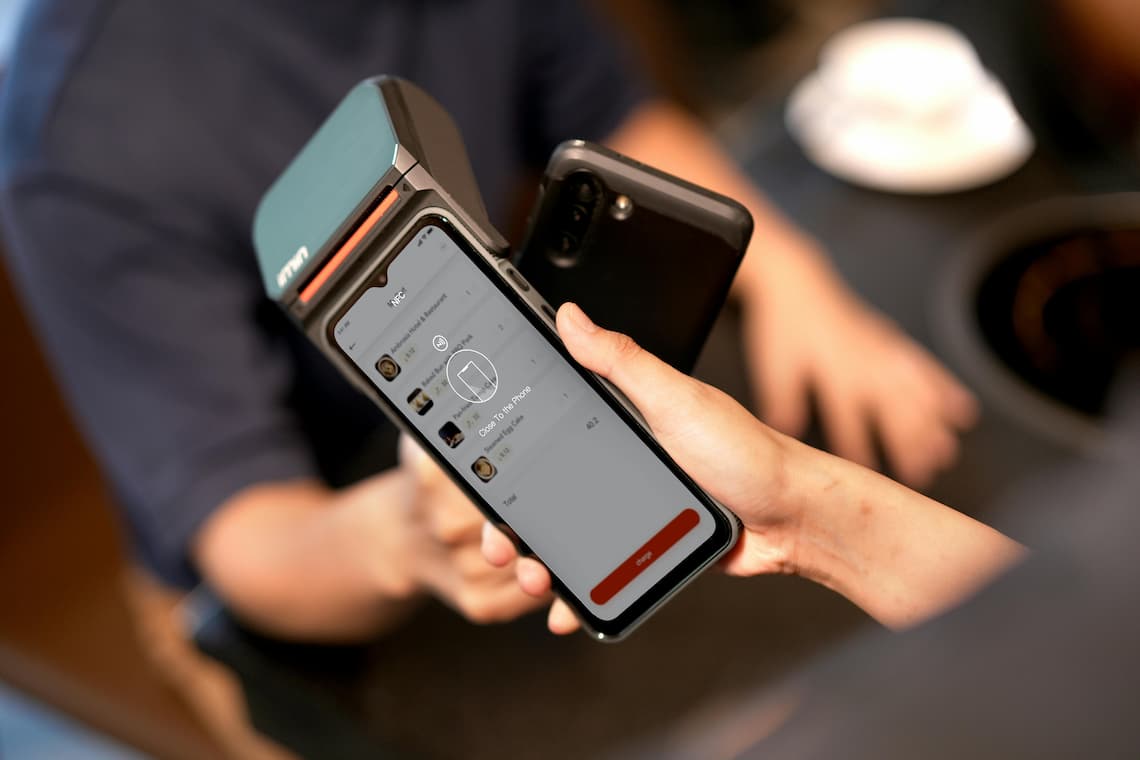
Mobile payment processing for businesses that accept card payments outside a fixed location — contractors, trades, service businesses, food trucks, markets, and any merchant who needs to take payments in the field. Mobile merchant services from Brookside provide interchange-plus pricing with reliable hardware and dedicated support. Whether you need a mobile credit card reader for job-site acceptance, phone payment processing for remote invoices, or tablet payment processing at a market booth — mobile payment solutions for small business need to handle all of it without flat-rate overcharging. According to Federal Reserve interchange fee data, most field businesses overpay by defaulting to flat-rate mobile processors that do not reflect their actual card mix.
Why Field Businesses Need Mobile Payment Processing
Accepting payments in the field enables card acceptance anywhere — at a job site, customer location, market booth, or delivery stop. Without it, businesses either chase invoices after the fact or lose sales to competitors who accept cards on the spot. Proper mobile credit card processing for businesses also qualifies transactions at card-present interchange rates — significantly lower than keyed or invoiced card-not-present rates.
The Keyed Transaction Penalty
A contractor who keys in card details over the phone pays card-not-present interchange — typically 0.3–0.5% higher than a chip-read transaction. On a $5,000 job that’s $15–$25 per transaction in avoidable interchange cost. For contractors specifically, read our post on what happens when Square freezes your account and why individually underwritten accounts are structurally different. The bank merchant services call post explains why your existing banking relationship is rarely the best option for mobile processing accounts. See CFPB guidance on card payments for consumer protection context.
Mobile Credit Card Reader and Hardware Options
A modern mobile credit card reader connects to a smartphone or tablet via Bluetooth and accepts chip, tap, and swipe payments. Mobile POS systems for field use have specific requirements that differ from fixed-location terminals — battery life, cellular connectivity, and durability matter as much as processing capability. Key considerations when selecting hardware:
- Chip (EMV) acceptance — required for card-present interchange qualification and chargeback liability protection
- Contactless / NFC — tap-to-pay for Apple Pay, Google Pay, and contactless cards
- Battery life — critical for full-day field use without recharging
- Connectivity — Bluetooth reliability and range from the paired device
- Receipt options — email receipt, SMS receipt, or printed receipt via paired printer
Merchants who accept payments on mobile devices need hardware that matches their specific field environment. Contact us to match the right setup to your transaction volume and use case. Understanding what a merchant account is and how it differs from payment facilitator platforms like Square is worth reading before you make a switch. If you are unsure whether a dedicated account makes sense at your volume, read do I need a merchant account.
Field Payments vs Keyed Transactions
Many field service businesses default to keying card numbers into a virtual terminal or calling them in — especially for large invoices. This is convenient but expensive. Keyed transactions qualify as card-not-present and carry higher interchange rates than chip-read field transactions.
For a business processing $30,000/month in field payments, switching from keyed transactions to chip-read acceptance commonly reduces effective rate by 0.3–0.5% — saving $90–$150/month, or $1,080–$1,800/year. Smartphone payment processing eliminates this gap entirely. Use the Effective Rate Calculator to estimate the savings at your volume. For why tiered and flat-rate pricing consistently cost more, see how tiered pricing works. When you are ready to switch, read how to switch payment processors without losing a day of sales.
Pricing Models for Mobile Payment Processing
Most mobile payment apps for merchants — Square, PayPal Here, Stripe — charge flat rates: 2.6% + $0.15 for Square, 2.29% + $0.09 for PayPal Here. These rates apply regardless of card type. On-the-go payment processing through an individually underwritten merchant account on interchange-plus pricing pays the actual card network cost plus a fixed markup — typically producing a lower effective rate than flat-rate processors — especially at volumes above $10,000/month.
For merchants who have outgrown flat-rate aggregators, Square alternatives built on real merchant accounts typically cut effective rates by 20–35%.
Or, Dual Pricing for Field Payments
For contractors, trades, and service businesses quoting jobs before the work is done, dual pricing lets you quote separate cash and card prices — shifting the processing cost to the card-paying customer. The result is a near-zero effective rate. Works especially well at high average tickets where the dollar savings are visible to both parties. Read the dual pricing vs. cash discount comparison to understand the distinction.
Cost Comparison: Mobile vs Flat-Rate
The difference between flat-rate and interchange-plus mobile payment processing grows significantly at volume. Here is a side-by-side comparison at common field business monthly volumes, assuming a standard card mix and $150 average ticket:
| Monthly Volume | Square Mobile 2.6% + $0.15 | Interchange-Plus ~2.1% eff. | Annual Savings |
|---|---|---|---|
| $15,000/mo | ~$400 | ~$278 | ~$1,464 |
| $30,000/mo | ~$800 | ~$555 | ~$2,940 |
| $60,000/mo | ~$1,600 | ~$1,110 | ~$5,880 |
* Estimates based on chip-read card-present transactions at $150 average ticket. Actual savings depend on card mix and transaction count.
Mobile Payment Processing Security
Modern mobile payment solutions for small business address security through two layers of protection:
- End-to-end encryption (E2EE) — card data is encrypted inside the reader at the moment of swipe, dip, or tap. It never exists in readable form on your smartphone, tablet, or in transit to the processor.
- EMV chip technology — chip cards generate a unique cryptogram for every transaction that cannot be reused or counterfeited. Counterfeit card fraud risk is effectively eliminated for chip-read transactions.
Mobile credit card processing for businesses is as secure as any fixed-location terminal — and significantly more secure than keyed or phone-order transactions.
Setup: What to Expect
Frequently Asked Questions
Contractors benefit most from a setup that combines chip/tap acceptance for card-present rates on job-site payments with invoice payment capability for deposits and remote collections. Interchange-plus pricing is typically the most cost-effective model at contractor transaction volumes and ticket sizes.
Most solutions use your smartphone’s cellular data — not WiFi. As long as you have a cell signal, you can process payments. Some terminals also store transactions offline and process them when connectivity is restored, though this carries authorization risk.
Yes. Modern hardware uses end-to-end encryption — card data is encrypted inside the reader at the moment of swipe or dip and never exists in readable form on your phone or in transit. Combined with EMV chip acceptance, mobile payment processing is as secure as fixed-location terminal acceptance.
Most accounts fund within one to two business days after batch settlement. Same-day funding options are available on some accounts. Brookside confirms funding timelines during account setup based on your business type and processing volume. Learn more about payment processing consumer protections from the CFPB.
See What Mobile Processing Should Actually Cost
Send your current statement and we’ll calculate your effective rate, show you what interchange-plus saves over flat-rate mobile processors, and confirm the right hardware for your field setup. No obligation.
Request a Free Statement ReviewOr call (833) 382-1992 · hello@brooksidepayments.com