Salon & Spa Payment Processing
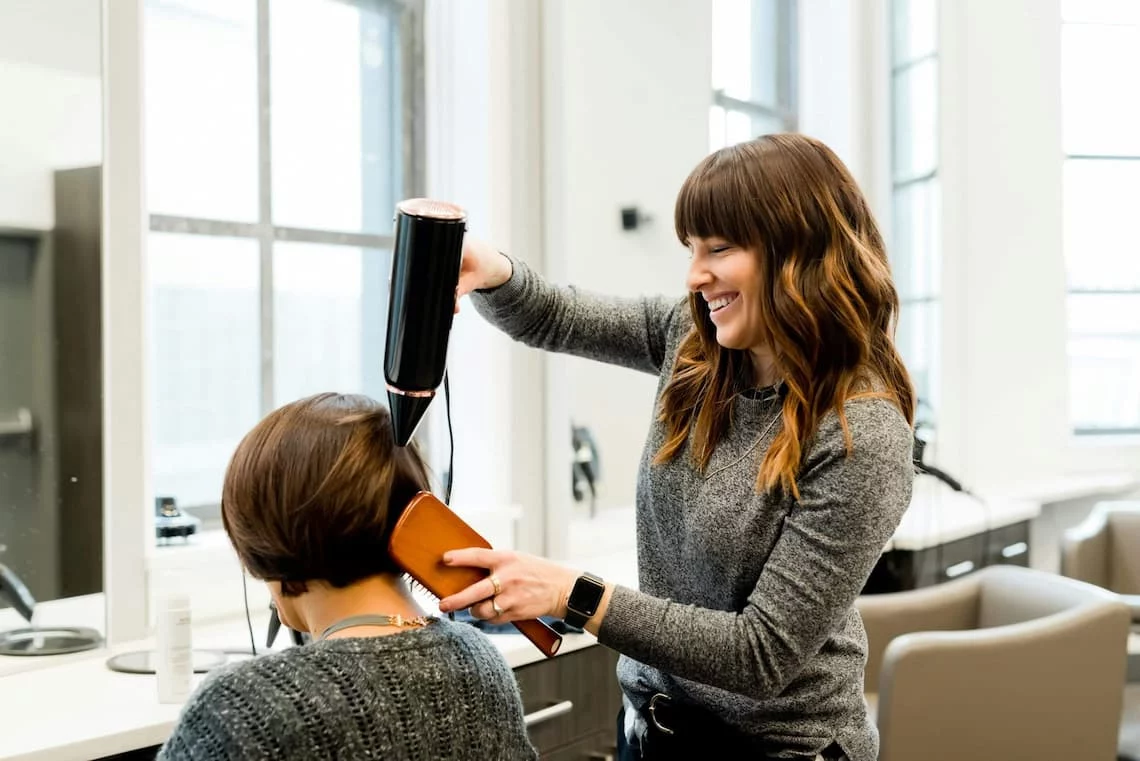
Salon payment processing and spa payment processing for hair salons, nail salons, barbershops, day spas, med spas, and beauty businesses. Brookside provides interchange-plus salon payment processing with card-on-file support, tip processing at actual interchange cost, and dedicated service to help salon and spa owners control — or eliminate — processing costs. Most beauty businesses overpay by defaulting to flat-rate platforms like Square, GlossGenius, or Vagaro that charge 2.6% on every transaction regardless of card type.
Most salon owners started with Square or Stripe or a booking platform that bundled salon payment processing into the subscription. It was fast. It worked. And for the first year or two, the flat rate felt reasonable.
Then volume grew. A second stylist came on. Product sales picked up. Tips started running through the card reader instead of the cash jar. And that flat 2.6% rate — which sounded simple — started costing $400, $600, $900 a month in processing fees that nobody was itemizing, nobody was explaining, and nobody was offering to reduce.
That is the gap Brookside fills. We provide salon payment processing on interchange-plus pricing — the same pricing model used by every large-volume merchant in the country — so you see exactly what Visa and Mastercard charge, exactly what we charge on top of it, and nothing hidden in between.
Why Salon Payment Processing on Flat Rate Costs More Than It Should
Salon credit card processing on a flat rate works the same way regardless of card type — and that is the problem. Salon and spa transactions have a specific card mix that makes flat-rate pricing especially expensive. Most of your transactions are debit cards — Visa debit, Mastercard debit — tapped or inserted at the counter. The actual interchange cost on a $65 debit card tap is around 0.05% + $0.22. Your flat-rate platform charges you 2.6% + $0.15 on that same transaction. The difference — roughly $1.45 on a $65 ticket — is pure margin. When salon processing fees add up across hundreds of taps a month, the overpayment is substantial.
Multiply that across 400 to 800 transactions a month and the overpayment adds up fast. The same math cuts deepest at a nail salon, where the tickets are smaller still and the tips pile on.
These are real numbers from salon and spa statements we have reviewed. The overpayment exists because flat-rate platforms charge the same percentage on a $12 debit card tap (where interchange is pennies) and a $350 premium credit card (where interchange is $7+). On interchange-plus salon payment processing, you pay the actual interchange cost plus a small fixed markup — and the savings compound every month.
What Makes Salons and Spas Different
Every industry has a transaction profile that determines how much payment processing should actually cost. Salon and spa businesses have four characteristics that make flat-rate pricing especially punishing — and interchange-plus pricing especially effective.
Most salon clients pay with debit cards. Debit interchange is regulated by the Durbin Amendment at $0.21 + 0.05% — far below the 2.6% flat rate. Every debit tap on a flat-rate salon payment processing plan is a transaction where you are overpaying by the widest margin possible.
Average tickets in salons run $45 to $120, with spas and med spas higher at $150 to $400. These are not micro-transactions where flat rate makes sense. At $65 average and 500 transactions a month, the interchange-plus savings are large enough to cover a month of product inventory.
When a client adds a $15 tip on a $65 service, the flat-rate platform charges 2.6% on the full $80 — including the tip. On interchange-plus, the interchange cost on the tip portion is the same regulated rate. Over a year, tip processing fees alone can account for $500 to $1,500 in unnecessary cost depending on your volume and tipping patterns.
Booking platforms encourage storing client cards for no-show fees and cancellation charges. These are card-not-present transactions — and on flat-rate platforms, they process at a higher rate (often 3.5% + $0.15 instead of 2.6% + $0.15). On interchange-plus, card-not-present interchange is higher than card-present, but the gap is transparent and you see exactly what you are paying. There is no silent upcharge.
You Do Not Have to Give Up Your Booking Software
The most common concern salon owners have about switching salon payment processing away from their booking platform is losing the integration. If Vagaro or GlossGenius or Mangomint handles your schedule, your client profiles, your reminders, and your payments — pulling payments out feels like pulling a thread that unravels everything.
It does not work that way. Most booking platforms allow you to use an external payment processor through a gateway integration or a standalone terminal alongside the booking software. Your schedule, your client notes, your product inventory — all of that stays. What changes is who processes the card and what they charge you for it. Your salon payment processing moves to interchange-plus; everything else stays where it is.
We set up your merchant account, ship a terminal, and configure it to run alongside your existing booking software. Your clients see no difference. Your staff sees no difference. The only change is on your monthly statement — where the effective rate drops and the line items are readable for the first time.
If your booking platform locks you into their proprietary processor with no external gateway option, that is worth knowing — because it means the platform is earning margin on your salon payment processing that you cannot opt out of. We can help you evaluate whether the platform savings justify the processing premium or whether a different setup makes more financial sense.
Salon Payment Processing for Multi-Chair and Booth Rental Models
If you run a booth rental salon — where independent stylists rent chairs and manage their own clients — salon payment processing gets complicated fast. Some booth renters want their own merchant account. Some want to run through the house account and settle up at the end of the week. Some use their own Square reader at the chair.
We work with both models. A house account on interchange-plus pricing keeps the per-transaction cost low for every stylist, and we can provide reporting that breaks out volume by location or station. Independent booth renters who want their own account get the same interchange-plus rate — there is no volume minimum that prices them out.
A booth renter processing $3,000 a month should not be locked into a 36-month contract with a $495 early termination fee. Brookside salon payment processing accounts do not require monthly minimums, and our agreements are month-to-month. If it does not work, you leave. That is how it should be.
Salon and Spa Payment Processing Across Every Format
Brookside provides salon payment processing for every format in the beauty and personal care industry — from a single-chair studio to a multi-location spa brand. The same logic applies everywhere else: see payment processing by industry for how the fee mechanic changes with the business.
Single-chair to multi-location. A hair salon merchant account on interchange-plus covers cuts, color, treatments, and retail product sales at the lowest available rate for your card mix.
High transaction count, lower average ticket. Debit-heavy — biggest flat-rate overpayment per transaction.
Walk-in heavy, cash and card mix. Barbershop payment processing benefits from dual pricing and cash discount programs that eliminate processing cost entirely.
Higher average tickets, gift card sales, membership billing. That fuller mix — packages, gift cards, and memberships — is its own build; see day spa payment processing. Card-on-file for packages and recurring treatments.
High-ticket services ($200–$2,000+). Some procedures may require healthcare merchant services compliance depending on licensure.
Appointment-based, moderate tickets, growing card adoption. Same interchange-plus advantage applies.
If You Are Leaving Square, Stripe, or a Booking Platform
You are not the first salon owner to realize that the flat-rate convenience has a cost. Merchants who switched their salon payment processing to interchange-plus found immediate savings. Here is what others in your position discovered when they looked at the numbers:
Frequently Asked Questions
Tips run through the card the same way a service charge does — and on flat-rate platforms like Square, you pay 2.6% on the tip portion just like the service portion. On interchange-plus salon payment processing, the interchange cost on tip dollars is the same regulated debit rate or actual credit interchange — typically a fraction of what flat-rate charges. Across a year of tip processing, the savings often run $500 to $1,500 depending on volume and average ticket.
Both models work. Some booth renters prefer their own account for clean separation of revenue and tax reporting — interchange-plus pricing is available with no monthly minimums, so a stylist processing $3,000 a month gets the same rate as a high-volume salon. Other booth renters run through the house account and settle weekly. Reporting can be configured to break out volume by stylist or station so the math is clean either way.
Card-on-file is supported on every Brookside salon payment processing account. Booking platforms encourage storing client cards specifically for no-show fees and late cancellations — when you charge that stored card, it processes as a card-not-present transaction at the actual interchange rate. On flat-rate platforms, card-not-present runs as high as 3.5% + $0.15. On interchange-plus, you see the rate clearly and the gap to card-present is much smaller.
Find Out What Your Salon Is Actually Paying
Send us a recent processing statement — from Square, Stripe, your booking platform, or whoever is handling your cards right now. We will calculate your effective rate, show you what interchange-plus salon payment processing would cost on your actual card mix, and tell you the annual difference. No obligation. No switching required to get the answer.
Request a Free Statement ReviewNo obligation • No pressure • Response within one business day
See what a statement review looks like →