Square vs a Merchant Account: Where the 2.6% Quietly Becomes 3.5%
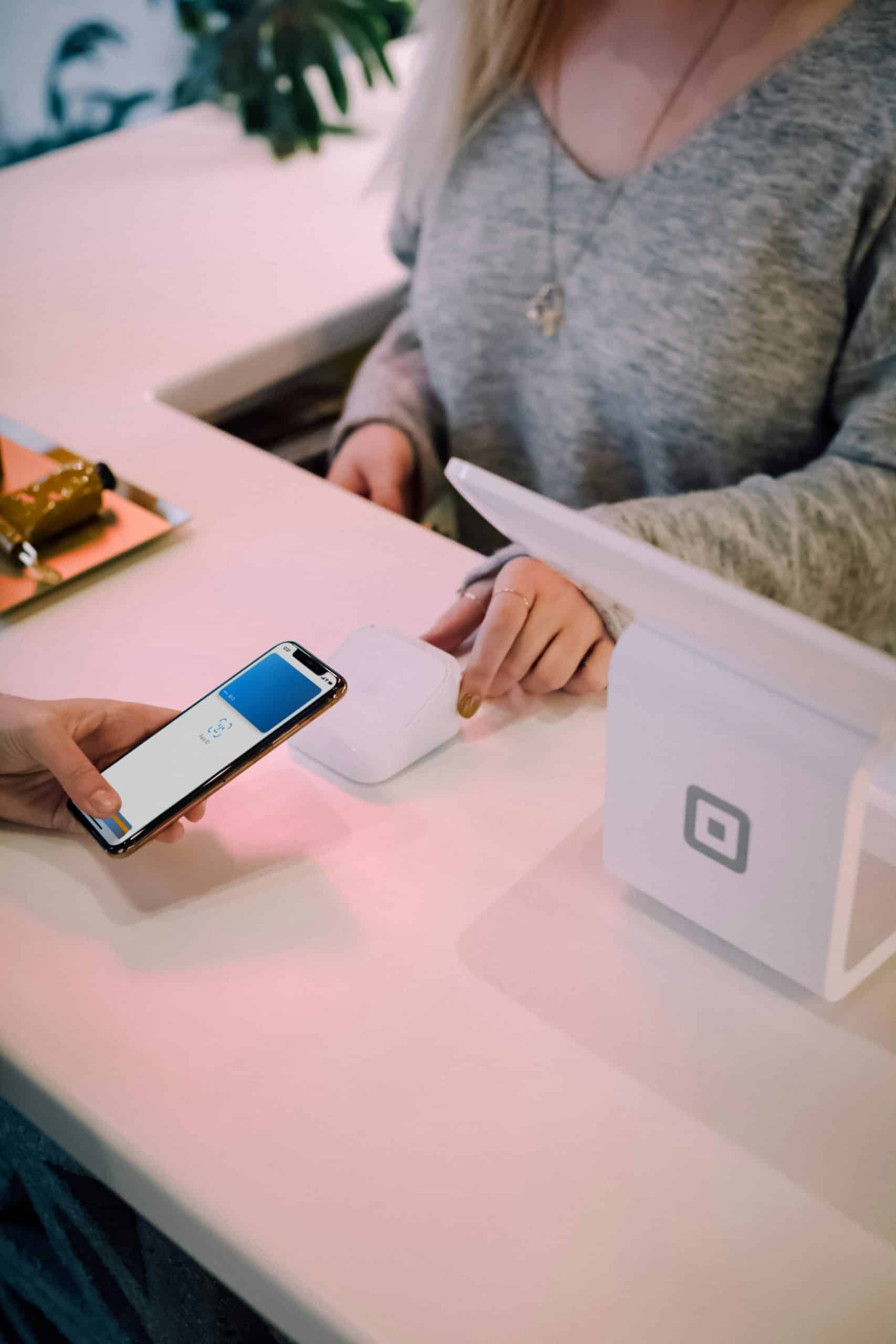
Square vs merchant account — Square is popular for small businesses getting started with card payments, but as volume grows the gap between Square’s flat rate and a dedicated interchange-plus merchant account typically widens significantly in favor of the merchant account. This comparison covers pricing, account stability, and the real cost difference at scale. For a full breakdown of all pricing models available, see the payment processing pricing guide.
How Do Square and a Merchant Account Compare on Pricing?
Square charges 2.6% + $0.15 for in-person transactions, 3.3% + $0.30 for online, and 3.5% + $0.15 for keyed-in transactions. According to Square’s published fee schedule, these rates apply regardless of card type — a basic debit card and a premium rewards card cost you the same percentage. This is the defining characteristic of flat-rate pricing — and why it costs more at volume — though for a seasonal business with months of zero sales, paying no monthly fees can be the cheaper trade. For a full explanation of how flat-rate works and when you outgrow it, read flat-rate payment processing explained.
That 2.6% is only the starting number. It is the rate for a standard card, swiped in person, on a ticket large enough that the $0.15 per-transaction fee barely registers. Shrink the ticket and that fixed $0.15 alone can add a full point or more; add any keyed or online volume at 3.3–3.5%, and a card mix heavy on rewards, and the rate you actually pay — your effective rate — quietly climbs toward 3.5%. On a $10 ticket the $0.15 fee is 1.5% by itself, so low-ticket retail can clear 3.5% effective before a single online sale is counted. That gap between the headline rate and the effective rate is what this comparison is about.
A dedicated merchant account with interchange-plus pricing passes through the actual card network cost plus a fixed markup. In the Square vs merchant account comparison, interchange-plus commonly produces a 0.3–0.6% lower effective rate — which on $300,000 annual volume is $900–$1,800 per year.
Did Square Raise Its Rates in 2026?
Yes — on January 13, 2026. Square’s online rate rose from 2.9% + 30¢ to 3.3% + 30¢ on the free plan, and from 2.6% + 30¢ to 2.9% + 30¢ on the paid plans — roughly a 14% increase on every online sale for a free-tier seller. It followed an October 2025 change that moved the in-person fixed fee from 10¢ to 15¢.
What makes that worth knowing is what did not happen. Under the Visa and Mastercard settlement, interchange — the wholesale cost of running a card, set by the networks and paid to the issuing bank — is held flat for five years. The cost underneath Square’s rate did not move in January. Square’s margin did.
That is what the two pricing models make visible or hide. A flat rate is a single number, so a merchant cannot tell whether an increase came from the card networks or from the processor. On interchange-plus pricing the cost and the markup are separate lines — and you can only negotiate the part you can see.
What Does Square vs Merchant Account Cost at Scale?
A business processing $80,000/month with a typical retail card mix pays approximately $2,080/month at Square’s in-person rate. The same volume under interchange-plus at a 2.1% effective rate costs approximately $1,480/month — $600/month, or $7,200/year. For businesses with large B2B invoices, adding ACH payment processing alongside a merchant account can eliminate fees on high-ticket transactions entirely.
How Does Card Type Affect the Comparison?
A basic Visa debit card costs roughly 0.8–1.1% interchange. A premium rewards credit card costs 1.8–2.4%. Square charges the same 2.6% for both. Under interchange-plus, you pay the actual cost plus a fixed markup — typically lower than 2.6% for most transaction mixes. The more debit cards in your transaction mix, the wider the savings gap becomes. See the full pricing model comparison to evaluate all options side by side. Learn more about interchange fee averages from the Federal Reserve.
Is a Square Account as Stable as a Dedicated Merchant Account?
This is the comparison that most cost analyses leave out. Square is a payment facilitator — you process under Square’s master merchant account, not your own. Square’s automated risk systems monitor every transaction, and when something triggers their algorithm, the account gets flagged. No human reviews it first.
A Square account freeze can happen overnight — and when it does, your business stops accepting cards until Square decides otherwise. Funds already processed but not yet deposited are held in reserve, potentially for up to 90 days. This is not a theoretical risk — it is a documented operational reality for businesses that process meaningful volume through Square. For a detailed breakdown of what triggers freezes and what to do, read Square payment processing problems.
A dedicated merchant account is individually underwritten. Your business type, transaction patterns, and average ticket are reviewed upfront — producing a stable, predictable processing relationship with a direct support contact rather than automated responses. With a dedicated account, chargebacks are handled through the card network dispute process with defined timelines — not an internal algorithm.
At $5,000/month, a Square freeze is an inconvenience. At $80,000/month, a freeze means $80,000 in revenue inaccessible until Square completes its review. The stability difference matters more as volume grows — not less.
What Happens to Square Hardware When You Switch?
Square uses proprietary hardware that does not transfer to other processors. When switching from Square to a dedicated merchant account, new terminal hardware is required. The underwriting timeline for a new account is typically one to three business days — hardware ships same or next day after approval. Most businesses are fully switched within one week. See the step-by-step guide on how to switch payment processors without losing a day of sales.
The hardware cost is typically recovered within one to two months of fee savings at meaningful processing volumes. Use the free cost analysis to calculate the exact payback period at your volume.
The Flat Rate Is a Starting Point, Not a Lock
Square raised prices in 2026 — online rose from 2.9% to 3.3% (a 14% jump) and the in-person fee moved to 2.6% + $0.15 — and a flat rate can climb again with no negotiated rate to fall back on. The free plan is the most expensive per swipe: lowering your rate means paying $49 or $149 a month for Plus or Premium, and custom pricing only opens above $250,000 a year. Hardware runs $59 to $1,189, instant transfers cost about 1.75%, and when you refund a customer Square keeps the processing fee. A dedicated merchant account locks a negotiated interchange-plus rate in writing instead of a published one that moves.
When Does Square Make Sense vs When Does a Merchant Account Win?
Square makes sense for very low-volume businesses under $5,000–$10,000/month where simplicity outweighs cost savings, and for sellers who need a no-commitment solution while getting started. A dedicated merchant account wins at volume — and wins decisively above $15,000/month. For more on the decision process, see do I need a merchant account.
Processing under $10,000/month. Want no monthly fees or commitments. Value simplicity over cost optimization while getting started.
Processing more than $10,000/month consistently. Want full cost transparency. Cannot afford the operational risk of an automated account hold.
Frequently Asked Questions
No — Square uses proprietary hardware locked to Square’s platform. Switching to a dedicated merchant account requires new terminal hardware, typically recovered within one to two months of savings at meaningful processing volumes.
Square payment processing fees are transparent at the headline level, but additional fees apply for online transactions (3.3% + $0.30), keyed entries (3.5% + $0.15), and certain card types. Interchange-plus makes all costs fully visible with no card type premiums bundled into a flat rate.
Yes. As a payment facilitator, Square can place holds on accounts and funds without manual review. Funds may be held for up to 90 days in termination scenarios. A dedicated merchant account does not carry this risk — your funds deposit directly to your bank on the standard settlement schedule. For context on how dispute resolution differs, see how PayPal and traditional processors handle disputes differently — the same structural difference applies to Square.
See the Square vs Merchant Account Numbers at Your Volume
Send your current processing statement and Brookside applies interchange-plus pricing to your actual transaction data — showing you exactly what you would save before you commit to anything.
Get Your Free Statement ReviewNo obligation • No pressure • Response within one business day
See what a statement review looks like →