Point of Sale Payment Processing That Isn’t Tied to One Processor
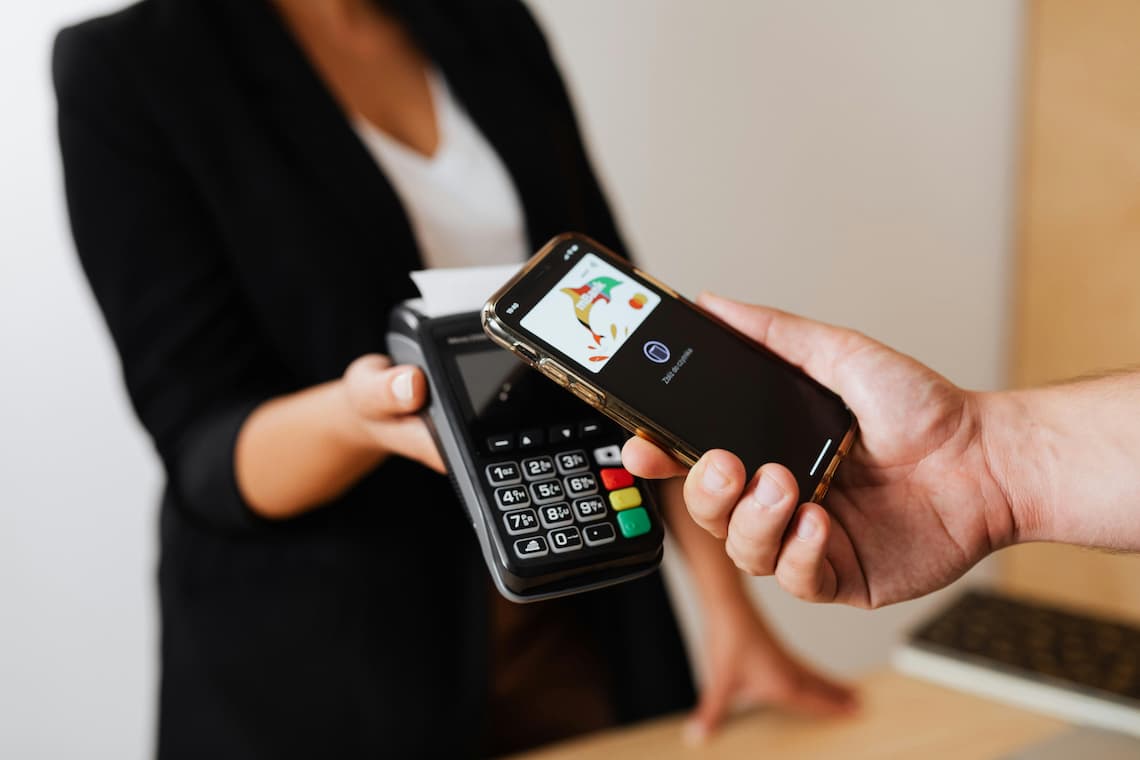
Point of sale payment processing for retail stores, restaurants, service businesses, and any merchant accepting card payments at a fixed or mobile location. Brookside provides transparent pricing, modern POS system hardware options, and dedicated support to help businesses control — or eliminate — processing costs at the counter. According to Federal Reserve interchange fee data, most businesses overpay on point of sale transactions by defaulting to flat-rate pricing that does not reflect their actual card mix.
How Point of Sale Payment Processing Works
The process begins the moment a customer presents a card at your terminal. The POS payment processing system reads the card data via chip, tap, or swipe and sends an authorization request through your payment gateway to the card network. The card network routes the request to the issuing bank, which approves or declines. The entire process takes two to three seconds. At end of day, your terminal batches all approved transactions and submits them for settlement — funds are deposited to your merchant account typically within one to two business days.
Get a Free Cost AnalysisThe Two Best Pricing Models for Point of Sale Payment Processing
Most POS merchants are quoted flat-rate or tiered pricing — the two structures that consistently cost the most. The two models below produce materially lower effective rates for nearly every business accepting cards at a physical location.
Dual pricing presents a cash price and a card price at the point of sale — the customer who pays by card covers the processing cost, the customer who pays cash pays the lower price. It is permitted in all 50 states and is increasingly common in retail and food service where the math is simple and the customer experience is straightforward. For a retail POS merchant services setup processing $60,000/month at 2.6%, that is $1,560/month in processing costs currently absorbed. Under dual pricing, that cost shifts entirely to card-paying customers. Use our pricing model comparison to run the numbers at your volume.
For businesses that absorb processing costs, interchange-plus pricing is the most cost-effective structure. You pay the actual card network interchange cost plus a fixed processor markup — every transaction’s cost is visible on your statement. For most businesses processing more than $10,000/month, interchange-plus produces the lowest effective rate. For why flat-rate and tiered pricing consistently cost more, read our post on how tiered pricing works. See CFPB guidance on card payments for consumer protection context.
POS Terminal and Card Reader Payment Processing Options
A POS terminal merchant account supports multiple hardware types — chip (EMV), contactless (NFC/tap), and swipe. Choosing the right card reader payment processing setup depends on your layout, transaction volume, and integration requirements.
Fixed POS terminals for retail and restaurant checkout counters — simple, durable, and the most common setup for single-register locations.
Battery-powered terminals for tableside service, line-busting during peak hours, or floor sales where a static counter is impractical.
Full touchscreen point of sale systems with inventory management, reporting, and payment processing integrated — typical for restaurants, multi-register retail, and operations tracking stock or employee activity.
Bluetooth card readers paired with tablets or smartphones — best for mobile service businesses, pop-up retail, and low-volume sellers who need flexibility over a fixed counter setup.
Customer-facing PIN entry devices for debit transactions and EMV chip verification — required for businesses where customers enter their own PIN rather than handing over the card.
If your current hardware is on a non-cancellable equipment lease — common with First Data Global Leasing, Northern Leasing, and other commercial lessors — the POS Lease Buyout Calculator runs the math on whether paying out the lease is cheaper than finishing the term. Related: how to get out of a POS lease walks through the buyout methods and FMV negotiation levers.
Contact us to match equipment to your specific needs. For specific problems businesses encounter with Square’s POS setup, read what happens when Square freezes your account. Understanding what a merchant account is and how it differs from payment facilitator platforms is worth reading before making a switch. The bank merchant services call post explains why your existing banking relationship is rarely the best option for POS accounts. When you are ready to move, read how to switch payment processors without losing a day of sales.
Frequently Asked Questions
A payment terminal handles card acceptance only — authorization, chip/tap/swipe reading, and receipt printing. A POS system integrates payment processing with inventory management, sales reporting, employee management, and customer data. Many businesses use a point of sale system that includes an integrated payment terminal for a unified processing setup.
Yes. EMV chip transactions qualify at card-present interchange rates and shift fraud liability to the issuing bank. Keyed transactions qualify as card-not-present — the highest rate category. Proper POS configuration maximizes chip acceptance to minimize interchange costs.
Dual pricing and interchange-plus are the two best options for point of sale payment processing. Dual pricing offsets processing costs entirely — increasingly common in retail and food service. Interchange-plus is the most cost-effective structure for businesses that absorb costs, making your effective rate transparent and negotiable. Both significantly outperform flat-rate and tiered pricing.
Most accounts are approved within one to three business days. Hardware can ship same day or next day after approval. Brookside coordinates the full setup — account approval, hardware configuration, and gateway integration — so your POS is ready to process on arrival.
See What Your POS Is Actually Costing You
Send us your last processing statement. We calculate your real effective rate, show you what the same volume would cost on dual pricing or interchange-plus, and flag every fee line item worth questioning. If your current setup is already competitive, we tell you that too.
Get Your Free Statement ReviewNo obligation • No pressure • Response within one business day
See what a statement review looks like →