The Person Who Reads Your Statement
Most merchant services companies are a phone number and a logo. You never learn who is on the other end, and if you did, they’d be gone in eight months anyway. So before you send anyone your financial statement, you should know exactly who is going to open it.
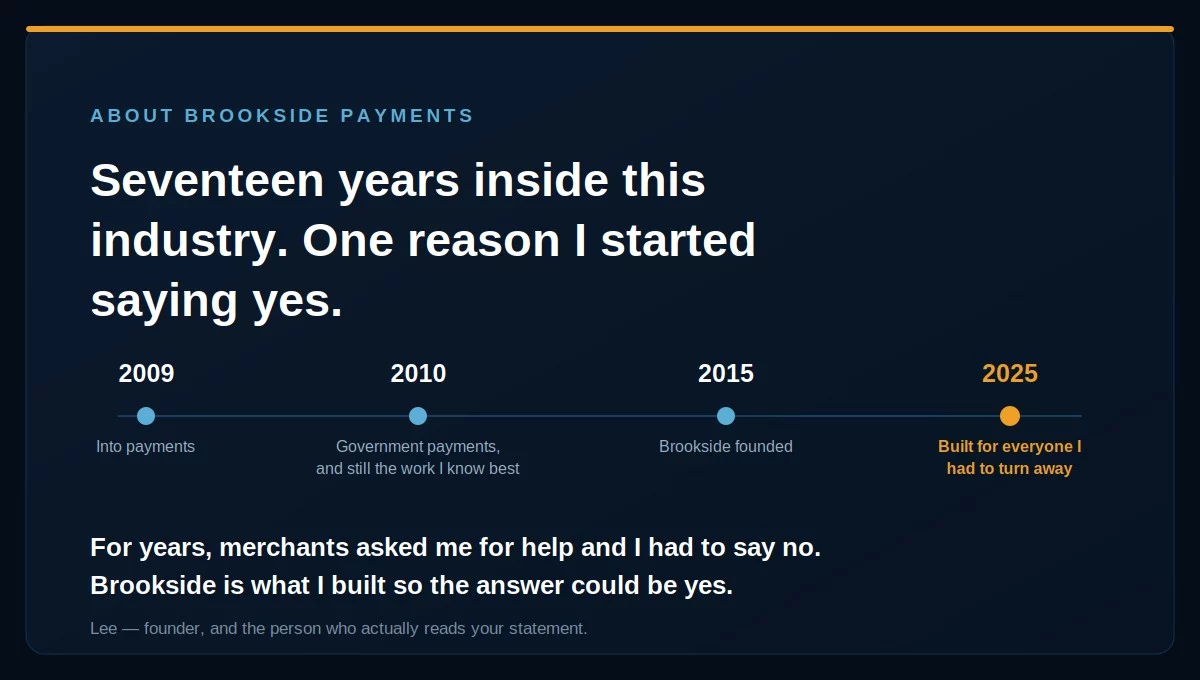
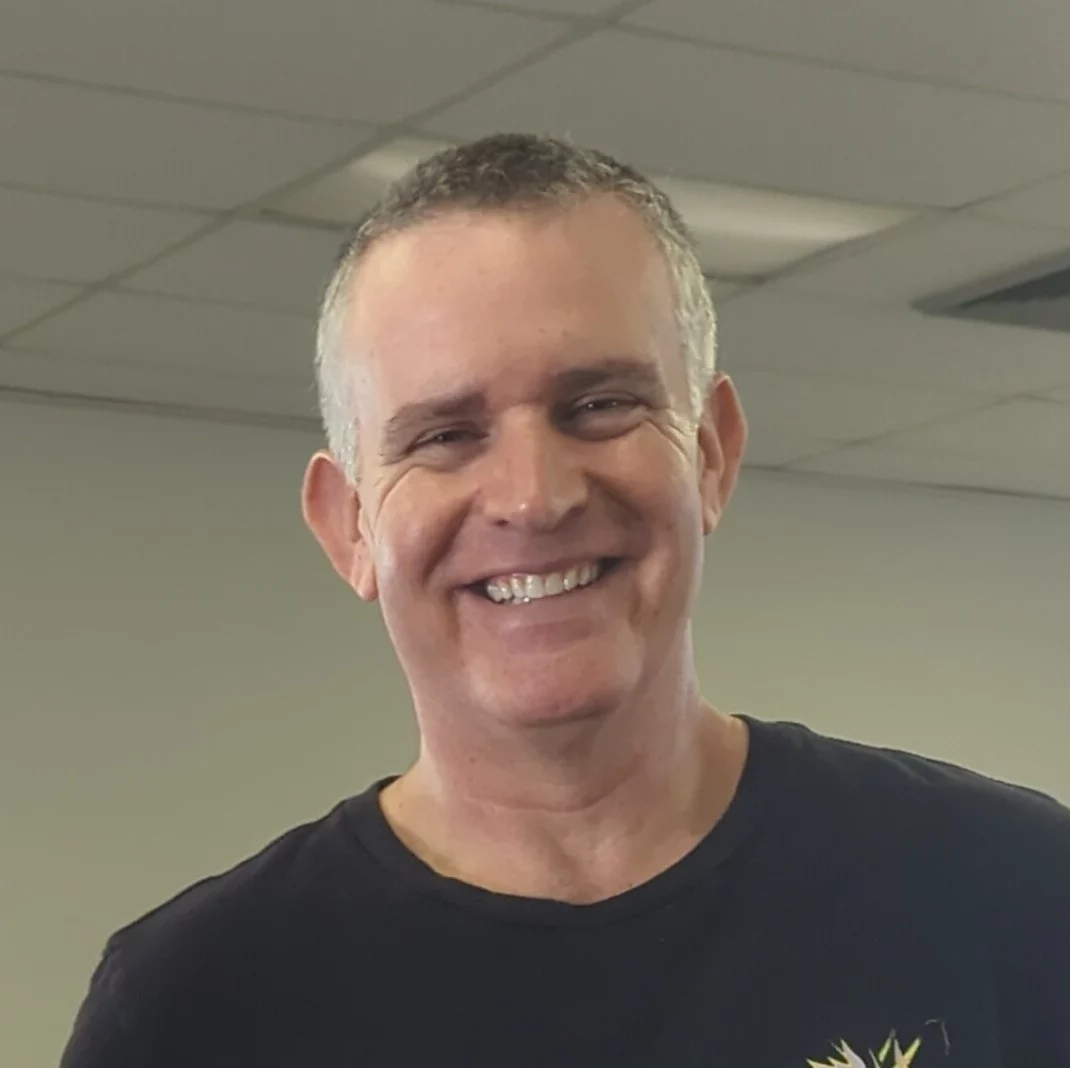
It’s me. My name is Lee, I’ve been in payment processing since 2009, and Brookside Payments is the company I built because seventeen years in this industry taught me what it keeps getting wrong.
Seventeen Years, Most of Them in Government Payments
I came into payments in 2009 with a processor, and in 2010 I moved to Value Payment Systems — which later became Catalis Payments. That’s where most of my career has been, and almost all of it in government payments: counties, municipalities, agencies, courts. The unglamorous end of the business, and the one where the stakes are strangely high, because when a county’s payment portal breaks, a citizen can’t pay a fine or a tax bill.
In 2015 I founded Brookside Financial — originally for the boring reasons any operator does it: legal structure, liability, continuity. It sat quietly for years while I did the work.
The Answer Was Always No
Here’s the part that eventually became unbearable. Over those years, people kept asking me for help. A restaurant owner. A contractor. Somebody’s brother-in-law with a shop. Merchants who’d been handed a terrible rate by a rep who never came back, and who knew I’d know what to do about it.
And I had to tell them no. Not because I didn’t want to help — because my work is in government payments, and I didn’t have the resources or the partners to serve a small merchant properly. Saying no to someone you could genuinely help is a peculiar kind of frustrating. It happened for years.
Brookside Payments — the site you’re on — went live last year, along with the processing partners behind it. It exists specifically so that the people I used to turn away have somewhere to go, and someone to ask.
What Private Equity Did to Customer Service
The other reason Brookside Payments exists is harder to say politely, so I’ll just say it. Over the last decade, private equity rolled up an enormous share of this industry, and the playbook is always the same: acquire, cut costs, extract.
What gets cut is people. And what people do, in payments, is fix things. So the support desk gets smaller, the person who understood your gateway integration is gone, and a technical problem that used to take a day now takes three weeks — while a merchant can’t take cards, or a county’s residents can’t pay their bills. The rate on the statement isn’t what degrades first. The help does.
There are two ways to see a client. One treats them as a profit center to be squeezed until they leave, then replaces them with another. The other treats them as a business you can genuinely make better, which is a slower way to make money and a much harder one to be embarrassed by. I only wanted to work with providers who see it the second way — so I went and found them.
The Uncomfortable Part, Said Out Loud
You should know how the person reviewing your statement makes money, because it tells you what he’s incentivized to do.
Interchange and card brand assessments are pass-through costs. Visa and Mastercard set them, everybody pays them, and I couldn’t mark them up if I wanted to. What I earn is a markup — one line, on your statement, visible, and negotiable. That’s the whole model. It’s the same number I’d show you in a statement review, and it’s why this entire website is built around teaching you to find the markup on any processor’s statement, including mine.
It also means that if you’re already on a good deal, I earn nothing meaningful by moving you — so I’ll tell you that instead. That happens more often than you’d think, and it’s the least expensive advice I give.
Not a Faceless Sales Agent
Brookside Payments is deliberately small, and everyone here was chosen for the same reason.
Tori P. came aboard because she works the way I do: understand what the client actually needs before proposing anything, and build the answer around them instead of around a quota. That’s the opposite of how most merchant services outfits operate, where the person who signs you disappears the moment the ink dries and you’re handed to a call center.
Small has a cost — we’re not going to be the biggest name you talk to. It also has a benefit, which is that when you email us, a person who knows your account reads it.
Advisory First, Processing Second
Brookside Payments is an independent merchant services advisory. In practice that means three things:
- We read statements. Send one and we’ll tell you your true effective rate, which fees are real costs, and which are markup. Free, and you owe us nothing afterward.
- We fix pricing. Usually that means moving you to interchange-plus, sometimes a fee-offset program, and occasionally telling you to stay exactly where you are.
- We stay. Support decays once an operation gets big enough. So the person who set up your account is the person who picks up when something breaks.
We serve merchants both locally in Nashville and Boca Raton, as well as nationally with businesses and government clients across the United States; hopefully making a positive impact to people’s prosperity.
Send One Statement. I’ll Tell You the Truth About It.
One recent processing statement, about fifteen minutes of my time, and you’ll know your real effective rate and exactly where the markup is hiding. If you’re already on a good deal, I’ll say so and you’ll owe me nothing. If you’re not, you’ll finally have the numbers to do something about it.
Send Your Statement for a Free ReviewNo obligation • No pressure • Response within one business day
See what a statement review looks like →