Contactless PaymentTap to Pay & NFC Payments
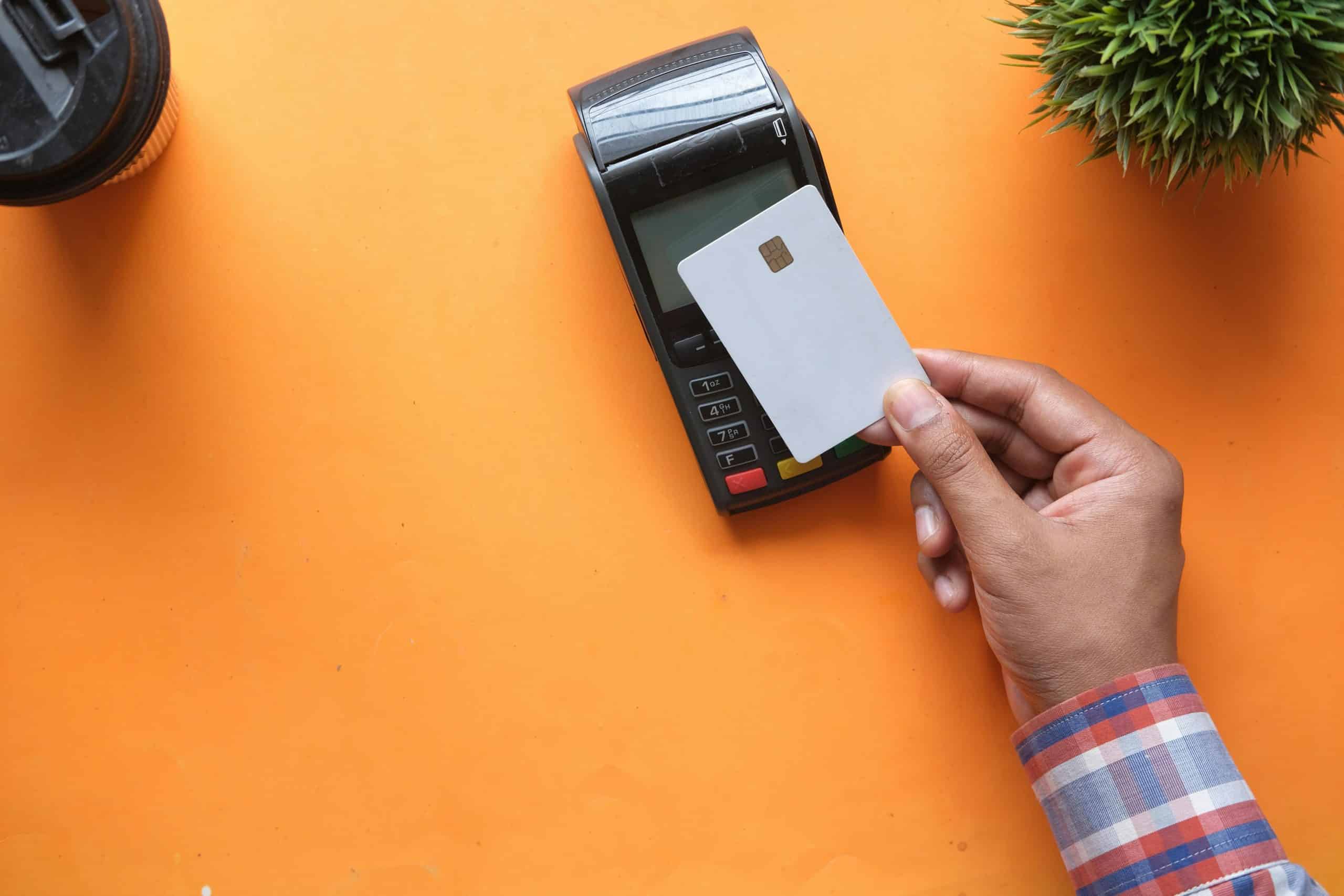
Contactless Payment Definition & Guide
A contactless payment is a transaction completed by holding a card, phone, or wearable near an NFC-enabled contactless card terminal — no insertion, no swiping, no signing required. The terminal and card communicate via Near Field Communication (NFC), a short-range wireless technology that works within a few centimeters of the reader. Tap to pay transactions qualify as card-present and receive the same lower interchange rates as chip insertions.
The actual card number is never transmitted — a token is sent instead, making NFC payment processing as secure as chip and far more secure than magnetic stripe. According to Federal Reserve data, tap volume has grown significantly since 2020.
Tap to pay works the same as chip — the card network authorizes the transaction and the funds settle the same day. The only difference is how the card communicates with the terminal: chip uses a physical contact, tap uses a short-range radio signal. For the merchant, the interchange rate, funding timeline, and chargeback rules are identical.
Apple Pay Google Pay merchant acceptance works the same way — the customer’s phone or watch stores a digital token of their card and transmits it via NFC. From your terminal’s perspective, it’s the same tap-to-pay transaction as a physical card.
The entire NFC tap flow completes in under a second:
The real card number is never transmitted at any step. A unique transaction token is generated for each tap — useless if intercepted. This is why contactless payment is classified as card-present for interchange purposes despite no physical card contact.
Tap payments use tokenization — the card network replaces the real card number with a transaction-specific token that is useless if intercepted. This is different from EMV chip, which generates a cryptogram, but the fraud protection outcome is equivalent. Both prevent counterfeit fraud effectively.
On interchange, tap qualifies at the same card-present rate as chip. There is no premium — a tap to pay merchant pays the same rate whether a card is dipped or tapped. Under interchange-plus pricing, tap and chip transactions appear at the same interchange tier. The CFPB’s guidance on digital security recognizes tokenization as a primary consumer protection in tap-to-pay transactions.
Accepting tap payments requires NFC-capable hardware. Most POS terminals manufactured after 2018 includes this capability — but it is sometimes disabled by default and needs to be activated by your processor. If your terminal has the NFC symbol but it does not work, contact your processor to enable it.
Older terminals without NFC readers cannot accept tap payments and cannot be upgraded — they require hardware replacement. A terminal upgrade typically pays for itself quickly in speed and customer satisfaction.
Yes. Tap payments use tokenization — the actual card number is never transmitted. Each tap generates a unique transaction token that cannot be reused, providing equivalent fraud protection to EMV chip technology.
No. Tap transactions qualify as card-present and receive the same interchange rates as chip. No additional cost — a tap to pay merchant pays identical rates either way.
Your terminal needs an NFC reader — a contactless card terminal. Most POS hardware manufactured after 2018 includes this capability, though it may need to be activated by your processor if it is not already enabled.
No special setup beyond having an NFC-capable terminal. Apple Pay, Google Pay, and Samsung Pay all use the same NFC token-based system as physical tap cards. If your terminal accepts tap payments, it already accepts digital wallets.
Contactless Transactions Often Qualify for Better Rates Than Chip-Insert. Your Setup Determines Whether You Get Them.
Send us your last processing statement. We will identify your contactless versus chip mix, verify your terminals are properly configured for tap-to-pay qualification, and show you what a fair effective rate looks like at your volume.
Request a Free Statement ReviewNo obligation • For glossary readers comparing pricing models and processor options • Response within one business day