They Handed Renata a Free Terminal. The Rate Behind It Cost Her $3,100 a Year.
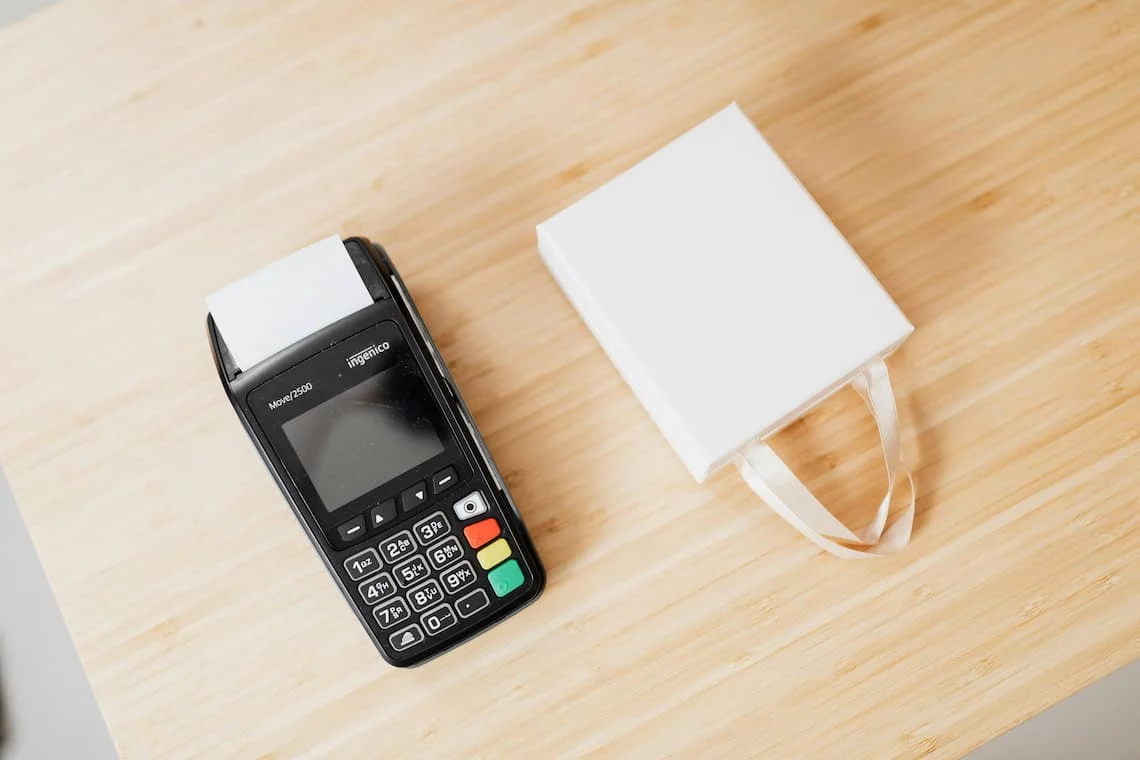
Renata’s Terminal Was Free. The Rate Behind It Was Not.
When Renata Vasquez opened Vela & Vine, a wine-and-gift shop off the plaza in Santa Fe, a processing rep walked in during her second week and offered her a free credit card terminal. No upfront cost, no rental line, the rep said — just sign here and start taking cards. Renata had a thousand things to do that week. A free terminal was one less thing to buy. She signed.
Two years later, comparing notes with another shop owner over coffee, she heard a number that did not match hers. She went home, pulled twelve months of merchant statements, and added up what she had actually paid to process about $40,000 a month in card sales. The free credit card terminal had cost her roughly $3,100 a year — every year — buried in a rate she never thought to question.
The hardware really was free. That part was true. What the rep left out is that a processor does not give away equipment. It recovers the cost somewhere you are far less likely to look: in the rate on every swipe, or in a second contract you did not realize you were signing.
Nobody Gives Away Hardware. They Recover It.
A countertop terminal costs a processor somewhere between $150 and $400 at wholesale. A free credit card terminal is not charity — it is a customer-acquisition cost, and like any business, the processor expects to earn it back with margin on top. There are two common ways they do it, and the more expensive one is the one you cannot see on an invoice.
The first is a padded rate. Instead of charging you interchange (the non-negotiable wholesale cost set by Visa and Mastercard) plus a small, transparent markup, the processor quietly widens the markup. An extra half a percent on $40,000 a month feels like nothing per transaction — fractions of a cent here and there — but it compounds into thousands of dollars a year. That spread is where the free credit card terminal gets paid for, several times over, across the life of the account.
On a statement, a padded rate does not announce itself. It shows up as a slightly higher effective rate — your total fees divided by your total card volume. Most owners never calculate that number, which is exactly why the rate is where processors prefer to bury recovered hardware costs.
The second method is a separate equipment lease — and this is the one that does real damage. The terminal is “free,” but a few lines down in the paperwork you have agreed to a 48-month, non-cancellable equipment lease or a monthly “service” or “warranty” fee for the same device. Brookside has written about the bundled equipment lease that outlives the hardware itself; the free-terminal pitch is often how that lease gets in the door in the first place.
What “Free” Cost Over Two Years
Renata’s processing ran at an effective rate roughly 0.65% higher than the interchange-plus offer she was eventually quoted by a transparent processor. On $40,000 in monthly card volume, that is about $260 a month, or a little over $3,100 a year. Two years in, her free credit card terminal had absorbed more than $6,000 — for a device that retails for under $300.
A free terminal that adds 0.65% to your rate on $40,000 a month costs you more in its first three months than buying the same terminal outright would have cost you once.
The math is not exotic. It is the oldest move in the industry: trade a small, visible cost the customer notices (the price of hardware) for a larger, invisible one they do not (the rate). The visible savings win the signature. The invisible cost collects for as long as the account stays open.
Renata is not careless — she is typical. The free credit card terminal works as a sales tactic precisely because it lands in the moment a new owner is busiest and least likely to audit a rate sheet. The hardware is the bait, the rate is the hook, and the gap between the two is the part nobody reads aloud at the signing table.
How To Spot The Real Price Of A Free Terminal
The offer itself is not a scam, and a free credit card terminal can be a perfectly fair perk when the rate underneath it is honest. The problem is never the word “free” — it is what the word is distracting you from. Three questions separate a genuine perk from a recovery scheme.
- What is my markup over interchange? A fair interchange-plus quote states it plainly — for example, “interchange plus 0.25% and 10 cents.” If the rep cannot or will not give you a number, the hardware is being paid for in the dark.
- Is there a separate equipment agreement? Ask directly: “Am I signing a lease, rental, or service plan for this terminal?” Get the answer in writing, then read the section on cancellation and liquidated damages.
- What happens to the terminal if I leave? If it is truly free, it is yours. If you have to return it or keep paying for it after you switch, it was never free.
It also helps to know your own baseline. You can calculate your effective rate from any monthly statement in about two minutes, and the contract clauses worth catching before you sign are laid out in our guide to merchant agreement red flags.
You Are Not Stuck With The Rate
If you took a free credit card terminal years ago and only now suspect the rate has been quietly paying for it, the good news is that the processing relationship and the hardware are usually two separate problems with two separate fixes.
First, get your real effective rate so you know the size of the leak. Then check whether a separate equipment lease exists — if it does, that contract is what binds you, not the terminal. The rate itself you can almost always improve by moving to transparent interchange-plus pricing.
If a lease turned out to be hiding behind your “free” device, our POS lease buyout calculator shows what walking away actually costs, and the steps for getting out of a POS lease apply the same way. Renata kept her terminal, moved to interchange-plus pricing, and closed the $3,100 leak in a single statement cycle.
Frequently Asked Questions
Sometimes, yes — a fair processor may include a basic terminal at no cost as a genuine perk when the rate underneath it is transparent. It stops being free when the hardware is recovered through a padded rate or a separate, non-cancellable equipment lease. The word “free” is only as honest as the markup and the contract behind it.
Calculate your effective rate — total monthly fees divided by total card volume — and compare it to a transparent interchange-plus quote. The gap, multiplied by your annual volume, is roughly what the free credit card terminal is costing you each year. Then check your paperwork for any separate equipment lease or monthly device fee.
It depends on whether the device is truly yours or tied to a lease. Many free terminals are locked to the original processor and cannot be reprogrammed, so you may need new hardware when you move. If a lease exists, that contract — not the terminal — is what you have to resolve before switching.
Send Your Statement. We’ll Show You Where the “Free” Terminal Is Hiding.
If a rep ever handed you a free credit card terminal, the cost is somewhere in your rate or your contract — and we can find it. Send Brookside one recent statement and we’ll calculate your real effective rate, flag any equipment lease buried in the paperwork, and tell you exactly what the hardware has been costing you. The math takes us about fifteen minutes. Learn more about payment processing consumer protections from the CFPB.
Send Your Statement for Free ReviewNo obligation • No pressure • Response within one business day
See what a statement review looks like →