The Lease That Outlived Diego’s Shop Management Software
Equipment Lease Payment Processing Outlived Diego’s Software by Eighteen Months. The Bill Still Comes.
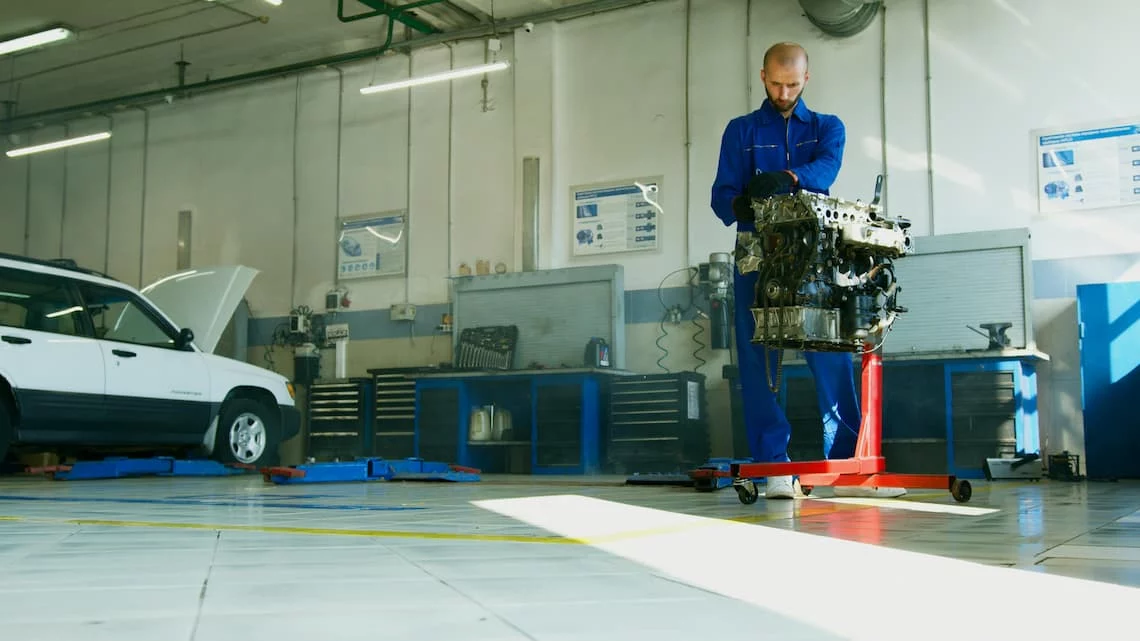
Diego Salazar runs Salazar Auto Care on a side street off Speedway Boulevard in Tucson, Arizona. Three bays, two ASE-certified techs, a waiting room with a coffee pot that actually gets refilled. The kind of independent shop people drive past four chain franchises to reach because Diego will tell them when something is fine to leave alone for another six months. He is also the kind of shop owner who, three years ago, signed an equipment lease payment processing agreement he did not fully understand.
In early 2023, a rep from a shop management software company came by with a tablet. Not a sales pitch for software. A pitch for a complete operating system. The software ran on the tablet. The tablet ran the customer-facing payment terminal. The payment terminal cleared the card. The card cleared into Diego’s account. One vendor, one monthly bill, one phone number to call if anything broke. Diego signed an equipment lease payment processing arrangement that paired a 48-month equipment finance agreement for the tablet plus integrated terminal — $129 a month — with a separate software subscription at $189 a month. Total monthly cost: $318. He liked the simplicity.
Eighteen months later, the software stopped fitting how Diego ran his shop. The vendor had pivoted toward fleet accounts and stopped developing the features that mattered to a three-bay independent. Diego switched to a different platform that fit better. The software subscription ended cleanly. The $189 stopped charging.
The $129 did not stop.
That was October 2024. It is now May 2026 and Diego is still paying $129 every month for a tablet that has been sitting in a drawer behind the parts counter for nineteen months. He has another thirty months left on the lease. At that point he will have paid $6,192 total — $4,128 of it for hardware he stopped using a year and a half before the lease ends.
This is what equipment lease payment processing looks like when the software and the hardware are separated at the contract level but bundled at the sales level. The rep made it sound like one decision. It was two. Diego made one of them well and one of them poorly, and there is no way to know which was which until you try to leave. Equipment lease payment processing contracts make that lesson expensive.
Equipment finance agreements on payment hardware are typically non-cancellable for the full term, even when the software or processor they came bundled with is no longer in use. Stopping the software does not stop the lease.
The Bundle Is a Sales Story, Not a Contract Structure
Equipment lease payment processing deals are sold as bundles, but they are structured as separate contracts. When a vendor sells you “everything in one package,” what they almost always mean is that they have set up the pricing and the sales conversation to feel like one decision. Behind the scenes, you are signing two or three separate agreements with different legal structures, different cancellation terms, and often different counterparties.
The software subscription is a month-to-month or annual agreement with the software company. Cancel any time, or at renewal. The processor agreement is with the merchant services provider — usually month-to-month after the initial term, sometimes with an early termination fee if you leave early. The equipment lease is the one that is almost never structured the same way as the other two. It is typically:
- 36 to 60 months, with 48 months being the most common term
- Non-cancellable for the full term — the lessor’s standard language uses words like “absolute and unconditional”
- Held by a third-party leasing company, not by the software vendor or the processor
- Personally guaranteed by the business owner in most independent-shop cases
- Often has a $1 buyout, fair market value buyout, or 10% buyout at the end
The third-party-lessor structure is the part that surprises most merchants when they try to cancel. Diego thought he was leasing the tablet from the software company. He was not. The software company sold the hardware-and-financing to a leasing company at the moment Diego signed, and the leasing company has been the actual counterparty ever since. The software company has no power to release Diego from the lease, even if it wanted to. This is the defining structural feature of equipment lease payment processing arrangements sold through software bundles.
This is the same structural pattern documented in how to get out of a POS lease — non-cancellable, third-party-held, personally guaranteed. The equipment-lease story is identical. What changes is the trigger. POS-lease stories tend to begin with a rep selling a Clover Mini at a trade show. Equipment-lease stories more often begin with a software vendor selling an integrated platform where the hardware was a footnote in the demo.
What Diego Actually Paid, Versus What He Thought He Was Paying
When the rep walked Diego through the numbers in early 2023, the conversation focused on the monthly total: $318. That number includes both the software and the hardware. Compared to the previous shop management system Diego had used, which charged $239/month and required a separate $59/month terminal lease from his old processor, the new $318 felt like roughly the same range with the upside of integration.
The number Diego did not ask about, and the rep did not volunteer, was the total cost of the equipment lease payment processing hardware over its full life:
Monthly payment: $129
Term: 48 months
Total lease payments: $6,192
Estimated hardware retail value at signing: ~$1,400
Effective annual finance rate (implied): ~38%
Lessor margin over hardware cost: ~$4,800 across the term
That effective rate is not unusual for equipment-lease financing on payment hardware. Independent equipment finance companies are not banks and are not subject to the same usury caps that apply to traditional consumer credit in most states. A 36-to-60-month equipment lease on a $1,000-to-$2,000 piece of hardware almost always works out to a 30-50% implied annual rate when you back-calculate against the retail value of the device. Equipment lease payment processing finance is one of the highest-margin product lines in the entire merchant services ecosystem.
None of this is illegal. None of it is hidden. The full payment schedule was on the lease document Diego signed. What was not on the document was a clear statement that the equipment lease payment processing obligation would continue even if Diego stopped using the software it came with. That part is in the boilerplate, and the boilerplate uses phrases like “absolute and unconditional obligation to pay” rather than “you cannot cancel even if the rest of the bundle ends.” Same outcome, different words.
The lessor’s right to collect payment does not depend on whether the equipment works, whether you use it, whether the seller is still in business, whether the software it ran on still exists, or whether you have any commercial reason to keep the hardware. The obligation is to the lessor, and the lessor has done nothing wrong by continuing to charge you.
Spot the Trap Before You Sign: Or After, If It Is Already Too Late
Spotting an equipment lease payment processing trap is easier before you sign than after. If you have not signed yet and a vendor is pitching you a bundled software-plus-hardware deal, the question that matters is not “what does this cost per month.” It is “if I cancel the software in 18 months, what happens to the hardware payment.” Ask it in those words. Make the rep answer it in those words. If the answer is anything other than “the hardware payment ends when the software ends,” you are looking at a split-contract structure where the hardware lease will outlive the software relationship.
The follow-up question is “who is the lessor on the hardware financing.” If the answer is the software company itself, the structure is simpler — you have one counterparty and they have an incentive to keep you happy across both products. If the answer is a third-party leasing company you have never heard of, the structure is the harder one. The software company has sold your hardware obligation to a financing company that has no ongoing relationship with you, no stake in your satisfaction, and no flexibility on the lease terms.
The third question, and this one is more for your own clarity than for the rep, is “what is the retail value of the hardware they are leasing me.” Search the model number. If the lease total over the full term is more than 3x the retail value, you are paying finance-company margin, not hardware cost. That is not a reason to walk away — sometimes the integration is worth it, sometimes the simplicity is worth it, sometimes the cash-flow smoothing is worth it. But you should know what you are buying. Sales reps have a strong incentive to keep the monthly number front and center and the total cost-of-financing in the boilerplate.
If you have already signed an equipment lease payment processing agreement and you are in Diego’s position — paying for hardware tied to software you no longer use — your options are narrower but not zero:
- Sublet the hardware to your new processor or platform. If the device is generic enough (most modern Android-based terminals are), some processors will help you re-flash it for use on their network. You still pay the lease, but you get use out of the hardware until the term ends.
- Calculate the buyout. Most non-cancellable leases have a buyout figure equal to the remaining payments plus residual. For Diego, that is ~$3,870 plus residual. Sometimes the lessor will discount the buyout 10-20% for an immediate payoff. Worth asking, never volunteered.
- Run out the clock and harvest the residual. At end of term, the residual is often $1 or fair market value. For a tablet that has been in a drawer, you might keep it for $1 and resell or repurpose. Not worth $4,128 of payments to harvest a $200 used tablet, but worth knowing the option exists.
None of these are good outcomes. They are damage control. The actual fix is upstream: ask the right two questions at the equipment lease payment processing sales conversation, and walk away if the answers reveal a split-contract structure you cannot live with.
This Is Not an Auto-Repair Problem. It Is a Bundled-Software Problem.
Diego’s story happens to take place in an independent auto repair shop, but the equipment lease payment processing pattern is industry-agnostic. Any vertical where a software vendor sells a complete operating platform — and includes a terminal, tablet, kiosk, scanner, or other payment-adjacent hardware as part of the package — has the same equipment-lease exposure. The hardware lease is the line item that survives the software relationship.
Verticals where Brookside has seen the equipment lease payment processing pattern most often:
- Auto repair, service, and fleet: Tekmetric, Shop-Ware, Mitchell, AllData — most ship with an integrated payment terminal option (Tekmetric pattern documented separately)
- Field service contracting: Housecall Pro, ServiceTitan, Jobber — mobile readers and tablets bundled into the platform pricing (Housecall Pro pattern, ServiceTitan pattern)
- Restaurant and hospitality: Toast, Clover, Square for Restaurants — the canonical POS-lease territory (Clover POS-for-restaurants pattern)
- Veterinary and dental: Cornerstone, Dentrix, Eaglesoft — countertop terminals leased through the practice management software
- Wellness and fitness: Mindbody, Vagaro, Booker — front-desk terminals leased through the booking platform
The pattern is not the vertical. The pattern is the bundling. Anytime a software vendor’s sales pitch includes a piece of hardware as part of the “everything you need” package, the equipment lease payment processing structure is likely separated from the software subscription at the contract level — even if the rep talks about them as one decision. The structural trend driving this is documented in the embedded payments piece: software companies are increasingly capturing payment revenue and bundling hardware financing into that capture. The lease side is where the lock-in lives.
Diego Salazar and Ray Thompson are illustrative composites. The fees, contract terms and mechanics described here are real and documented elsewhere on this site — the person and the business are not. Brookside does not publish real clients’ statements, which is why the sample statement review is a composite too.
Frequently Asked Questions
Generally no. The equipment lease is typically a separate legal contract held by a third-party leasing company, not by the software vendor. The lessor’s obligation to collect payment is not conditional on the software vendor remaining in business. If the software shuts down, the lease continues until the original term ends or you negotiate a buyout. Read the “absolute and unconditional” clause in your lease document for the exact language.
Look at the lease document for the lessor name and the address where you mail payments. If the company name is different from the software vendor — common examples include leasing-specific subsidiaries or unrelated finance companies — your lease was assigned or originated through a third party. The software vendor cannot release you from the lease in that case, even if you cancel the software subscription.
Most non-cancellable equipment leases calculate the buyout as the sum of remaining payments plus the residual buyout figure ($1, fair market value, or 10% are the most common residual structures). Some lessors will discount the buyout 10-20% in exchange for an immediate payoff, but they will rarely volunteer that. Ask explicitly: “What is the discounted payoff if I settle today.” If the answer is “we don’t offer discounted payoffs,” at least you know.
Send Your Lease Document. We Will Tell You What It Costs to Leave.
If you are paying for an equipment lease payment processing arrangement tied to software you no longer use — or you are about to sign a bundled deal and want a second pair of eyes on the contract structure — send Brookside the lease document. We will calculate the remaining-payments-plus-residual buyout, identify whether the lessor is a third-party financing company, and tell you what your realistic options are. The math takes us about thirty minutes. The conversation about what to do with it takes another fifteen. Learn more about payment processing consumer protections from the CFPB.
Send Your Lease for Free ReviewNo obligation • No pressure • Response within one business day
See what a statement review looks like →