Luis Processed $45,000 Through ServiceTitan Last Month. He Paid $1,237 in Fees He Did Not Have To.
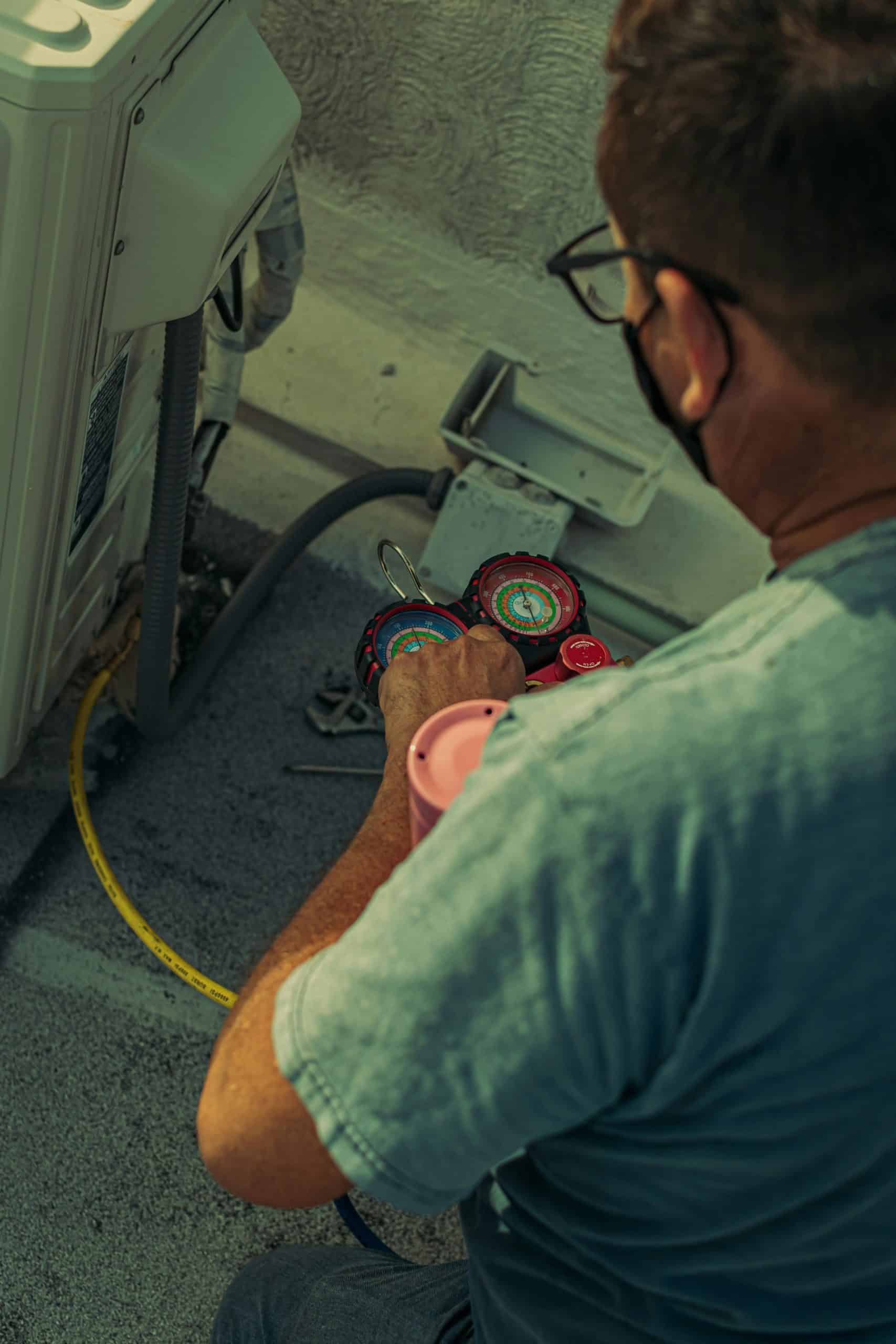
Luis Vargas runs an HVAC company in Albuquerque. Four technicians, residential and light commercial work, about $45,000 a month in card volume during the summer peak. ServiceTitan runs his business — scheduling, dispatch, invoicing, customer history. When ServiceTitan rolled out its built-in payments feature, Luis enabled it. The integration was seamless. He never thought about it again until I asked him what he was paying in processing fees.
He pulled up his statement. He was paying $1,237 a month in ServiceTitan payment processing fees — an effective rate of 2.75% on his volume. For an HVAC contractor whose jobs are invoiced and collected on-site with chip-and-tap, that number was high. He had just assumed this was what processing cost.
That assumption is what makes the search to reduce ServiceTitan payment processing fees so common among contractors who have been on the platform for a year or two and finally start doing the math. The fix is not a software change. Here is what it actually is.
What Luis Was Paying Through ServiceTitan Payments
ServiceTitan Payments uses flat-rate pricing — a single blended percentage applied to every card transaction regardless of card type. For an HVAC contractor whose customers frequently pay by credit card on a tablet at job completion, the rate applies to every transaction: $180 tune-ups and $4,200 system replacements alike.
For a HVAC contractor payment processing account with a typical card mix, a competitive effective rate falls between 2.1% and 2.6%. According to Federal Reserve interchange fee data, actual card costs vary significantly by card type and entry method — variation that flat-rate pricing ignores entirely. Luis was at the upper end of the competitive range, with room to reduce ServiceTitan payment processing fees by 20–30%.
Flat-Rate Pricing Is the Problem: Not ServiceTitan
ServiceTitan is field service management software. The payment processing is a separate component bundled into the platform. Like Jobber Payments, QuickBooks Payments, Housecall Pro Payments, or Mindbody Payments in fitness and wellness studios, ServiceTitan Payments uses flat-rate pricing — one blended percentage on every card, regardless of what the card actually costs to process.
For an HVAC contractor, the card mix creates a specific problem:
Durbin-regulated debit interchange runs approximately 0.05% + $0.22 per transaction. Luis pays 2.6% on every debit tap. The processor captures the spread — roughly $0.60 on a $100 transaction — on every debit card swipe. The same is true of credit: the networks publish their rates twice a year, and the distance between those rates and what your software charges is the whole argument.
Standard consumer credit interchange runs 1.51–1.80% depending on the specific card. Still below the flat rate, still a premium charged to Luis on every transaction.
Airline miles cards, hotel rewards cards, and commercial purchasing cards carry elevated interchange — sometimes reaching or exceeding the flat rate. For these transactions, the flat rate is less of a problem. But it also means there is no savings to pass to Luis when the card type changes.
At very low volumes — under $10,000 a month — simplicity can outweigh the cost. Above that, interchange-plus pricing almost always produces a lower effective rate, because each card type is billed at its actual interchange cost rather than averaged into a margin the processor collects on every debit transaction Luis runs.
How to Reduce ServiceTitan Payment Processing Fees Without Replacing Your Software
The fix is not switching away from ServiceTitan. It is replacing ServiceTitan Payments with a ServiceTitan merchant account alternative — a dedicated merchant account on interchange-plus pricing that integrates with the platform. ServiceTitan continues to run dispatching, scheduling, invoicing, and customer history. The payment processor — the company that actually moves money from the customer’s card to Luis’s bank — changes. The customer experience on-site does not change. The deposit timeline does not change. The only thing that changes is the rate.
What the Switch Actually Saved Luis
| Month | Volume | ServiceTitan Payments | Interchange-Plus | Savings |
|---|---|---|---|---|
| July (before) | $45,000 | $1,237 | — | — |
| August (first month after) | $47,200 | — | $981 | $256 saved |
| Projected annual | ~$480,000 | ~$13,200 | ~$10,000 | ~$3,200/year |
Thirty-two hundred dollars a year saved on a setup that took three days. That is the number most HVAC contractors see when they work through how to reduce ServiceTitan payment processing fees — and why the answer to “can I keep ServiceTitan and still switch processors” is the first thing they need confirmed before they act.
What Changes: And What Does Not
The hesitation most ServiceTitan users have when they look at this isn’t about the math — it’s about disrupting a platform that runs their entire operation. Here is what actually happens when you reduce ServiceTitan payment processing fees by replacing the processor underneath the software.
- ServiceTitan dispatch and scheduling
- Invoicing and job management workflow
- Field collection on technician tablet
- Email payment link for invoiced jobs
- Customer-facing payment experience
- Reporting and deposit timeline
- Effective rate drops 20–30%
- Statements show interchange separately
- Processor is a separate support contact
- Monthly statement becomes more detailed
- Rates are negotiable going forward
- Debit transactions cost what they actually cost
When ServiceTitan Payments Actually Makes Sense
For contractors processing under $10,000–$12,000 a month, the monthly fees on a dedicated merchant account can narrow or eliminate the savings from lower interchange rates. Startups and seasonal one-person operations may also benefit from the instant approval that comes with bundled payments, since dedicated merchant accounts require underwriting. The CFPB’s guidance on payment processing covers the basic tradeoff between flat-rate and interchange-based models at different business sizes.
You are in your first year, processing under $10,000 a month, or specifically need same-day deposit options that your current service level provides. Above $15,000 a month with a normal residential/commercial mix, the math to reduce ServiceTitan payment processing fees consistently favors switching to a dedicated interchange-plus merchant account.
Frequently Asked Questions
Yes. ServiceTitan is field service management software — the same company that now owns FieldRoutes, the platform behind much pest control payment processing. The payment processor is a separate component. ServiceTitan supports third-party payment integrations — when connected, payments route through the same workflow as ServiceTitan Payments. Dispatch, invoicing, job management, and reporting stay intact. The only change is which company processes the card and at what rate.
No. The customer-facing payment process on the technician’s tablet or phone does not change. The customer taps or inserts their card the same way. The receipt generates. The job closes. What changes is invisible to the technician and the customer — it happens at the processor level, not the ServiceTitan level.
Third-party payment integration terms vary by ServiceTitan plan and contract. Confirm directly with ServiceTitan before committing to a switch. Some plans include third-party integrations at no additional cost; others may charge a per-transaction fee for non-native payment processors. Factor any integration cost into your breakeven calculation — at $45,000 a month, even a $0.10 per-transaction add-on changes the math by roughly $45–$90 per month depending on transaction count.
If You Run ServiceTitan, We Will Show You Exactly What You Could Save.
The fastest way to reduce ServiceTitan payment processing fees is to send us your most recent processing statement. We will calculate your current effective rate, model what interchange-plus pricing looks like at your volume and card mix — including your residential, commercial, and premium rewards card split — and show you the annualized savings. Luis’s review took one day. His first statement after switching was $256 lighter. The only thing that changed was the processor.
Request a Free Statement ReviewNo obligation • No pressure • Response within one business day