Valeria’s Salon Was Paying Vagaro 3.04% on a Rate She Thought Was 2.2%.
Valeria’s Salon Was Paying Vagaro 3.04% on a Rate She Thought Was 2.2%.
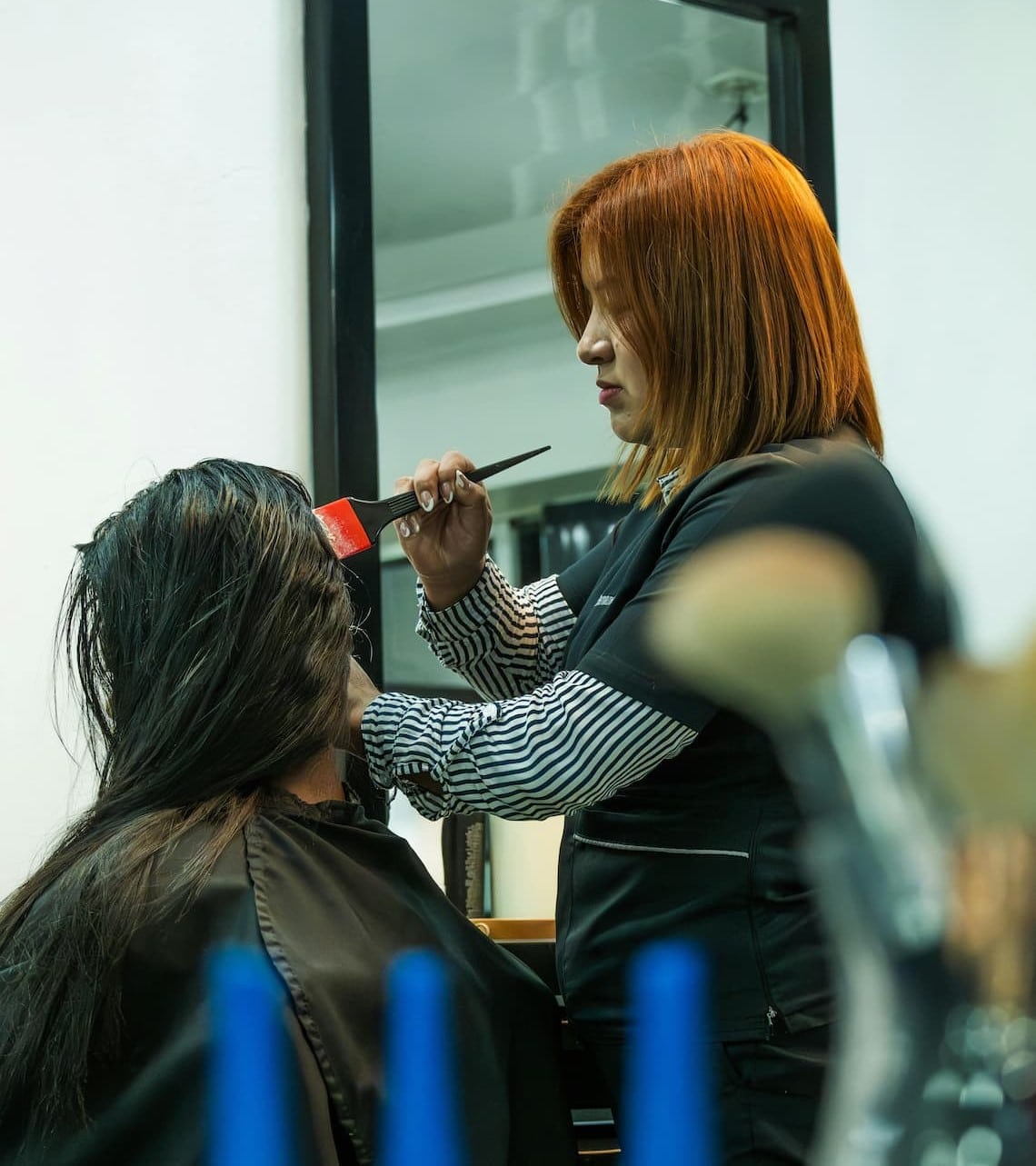
Valeria Restrepo runs a six-chair full-service hair salon in Raleigh’s North Hills district. Color specialists, balayage, keratin treatments, and a small medical-spa room in the back where one of her stylists does brow microblading and facials on a contractor schedule. Average ticket: $145. Her salon has been on Vagaro since 2022, when she migrated off pen-and-paper booking after her front-desk manager quit and took the appointment book with her.
Vagaro replaced three things at once — the calendar, the client database, and the card terminal. That third one is where the money sits. The salon processes about $32,000 a month in card volume. Vagaro’s marketing told her the rate was “as low as 2.2%.” Her March 2026 effective rate was 3.04%. On $32,000 a month, the gap in total Vagaro processing fees was costing her roughly $280 a month — about $3,360 a year — that she had no idea she was paying.
Here is what she was looking at, and what any Vagaro Pay merchant should check on their own statement before they renew.
What Vagaro Pay Actually Costs in 2026: And Why “Reduce Vagaro Payments Fees” Means Something Specific
Vagaro’s homepage shows “processing rates as low as 2.2%.” That number is real, but it applies to high-volume multi-location operators who have negotiated custom Vagaro Pay rates. For the typical small salon — one location, under $4,000 a month or just over — the published Vagaro Pay rates are 2.75% + $0.10 per swipe and 3.5% + $0.15 per keyed transaction. Multi-merchant tier accounts (operators with multiple linked businesses) drop the Vagaro Pay processing rate on swipes to 2.5% + $0.10, but the keyed Vagaro Pay processing rate stays at 3.5% + $0.15 across both tiers.
Valeria’s marketed rate and her actual rate are 55 basis points apart on swipes alone. That’s the first source of the gap. The second source is the keyed-transaction rate, which is where most salon merchants get hit hardest:
- Booking deposits taken over the phone — keyed, charged at 3.5% + $0.15
- Card-on-file recurring charges for memberships — keyed, 3.5% + $0.15
- No-show fees auto-charged via card-on-file — keyed, 3.5% + $0.15
- Online product sales from Vagaro’s e-commerce module — keyed, 3.5% + $0.15
- Tips processed after the appointment — depends on workflow, often keyed
For a hair salon running on Vagaro the way Vagaro intends merchants to run on it — recurring memberships, online deposits, e-commerce retail, no-show fees — keyed transactions are not the exception. They are routine. Valeria’s keyed mix for March 2026 was 38% of total card volume. At 3.5% + $0.15 on 38% of her volume, plus 2.75% + $0.10 on the remaining 62%, the math arrived at 3.04% effective whether she noticed or not.
So when a salon owner searches “reduce Vagaro payments fees,” the answer is not “ask Vagaro for the 2.2% rate.” That rate is gated by volume and contract structure she does not qualify for. The real reduction lives in two structural moves and one statement-audit discipline.
Booking-platform processors (Vagaro, Mindbody, Booker, GlossGenius) advertise the swipe rate prominently and bury the keyed rate in fine print. Salon, spa, and wellness verticals run heavily on phone bookings, recurring memberships, and online sales — all keyed. The advertised rate is real; it just is not the rate most salons actually pay. Always calculate effective rate (total fees ÷ total card volume) before benchmarking against the marketed headline.
Why You Cannot “Just Switch Processors” on Vagaro
Vagaro does not charge a separate monthly fee for using a third-party processor the way Lightspeed does, but it builds the lock-in differently. Several core Vagaro features only work if Vagaro Pay is your processor:
- No-show and cancellation fees require Vagaro Pay — the card-on-file functionality is tied to Vagaro’s card vault
- Recurring memberships and packages require Vagaro Pay — auto-billing runs through Vagaro’s processor
- Online deposits at booking require Vagaro Pay — checkout integrates with their hosted payment fields
- In-app text-to-pay invoicing requires Vagaro Pay
You can run the Vagaro scheduling layer without Vagaro Pay — many salons do during their evaluation period — but the moment you turn on the features that actually justify Vagaro’s $40–$80/month subscription, you are locked into Vagaro Pay. For Valeria, who relies on no-show fees to protect her stylists’ time and online deposits for color services, leaving Vagaro Pay means rebuilding her entire client workflow on a different platform. The switching cost is not the third-party fee — it is the operational rebuild.
The path to reducing Vagaro payments fees, then, is not “leave Vagaro Pay.” It is one of two structural moves that work within the platform, plus the statement audit that catches drift.
The First Way to Reduce Vagaro Payments Fees: Move Keyed Transactions to Swipes Where Possible
Every keyed transaction at 3.5% + $0.15 is a transaction Vagaro is earning 75 basis points more on than it would on a swipe. On Valeria’s $32,000/month volume with 38% keyed, that gap alone is $91/month — roughly $1,090/year — without changing a single fee on her contract.
Most of Valeria’s keyed transactions were not actually phone bookings. They were:
- Returning clients tapping “use saved card” in Vagaro’s hosted checkout — even though the original card was swiped at her terminal, Vagaro processes the saved-card transaction as keyed because there is no physical card-present event. Workaround: enable Vagaro’s mobile card reader for in-salon tap-to-pay using the saved card token through Apple Pay or Google Pay. Tap-to-pay qualifies as card-present and processes at the swipe rate.
- No-show fees auto-charged 24 hours after the missed appointment — these are unavoidable card-not-present transactions because the client is not in the chair. Accept the 3.5% on this category; it is small volume.
- Online product sales — Vagaro’s e-commerce module routes everything as keyed. If product sales are a meaningful percentage of revenue, a separate Shopify or BigCommerce store with its own processor can reduce blended rate on the product side without affecting service-side processing.
For Valeria, the saved-card-to-tap-to-pay workflow change alone shifted 18% of her volume from keyed to swiped. Monthly savings: $44. Not transformative — but it cost her nothing except a fifteen-minute staff training.
The Second Way to Reduce Vagaro Payments Fees: Dual Pricing on the Service Side
Vagaro does not offer native dual pricing or surcharging the way Toast or some other vertical platforms do. But salon pricing is unique among bundled-processing verticals because the service price is set per appointment, not per item on a menu, which makes dual pricing operationally straightforward.
The execution looks like this. Valeria sets her service prices in Vagaro as the “card price.” She trains her front desk to offer a 3% cash discount at checkout — disclosed clearly, optional, no pressure. North Carolina law permits cash discounting under the same federal disclosure rules that cover the rest of the country. Roughly 12–18% of clients at a typical hair salon will pay cash if offered a small discount; high-end color clients, less.
If 15% of Valeria’s $32,000/month volume shifts to cash, that is $4,800 in volume she no longer pays Vagaro 2.75-3.5% on. At a blended 3.04%, that recovers roughly $146/month — about $1,750/year — and the 3% discount she gives those clients comes out of the same processing margin she would have paid Vagaro anyway. Net to Valeria: the same revenue per transaction whether the client pays cash or card.
The second-order effect: clients who pay cash also book more frequently, because the felt friction of the bill is lower. Most salon owners who implement this see retention and rebook-rate improvement on the cash-paying segment within 90 days.
Service-based businesses with per-appointment pricing and trust-built client relationships — hair salons, nail salons, day spas, fitness studios — are the canonical dual-pricing fit. Clients in these verticals are already comfortable with negotiated pricing, tip-based compensation, and direct conversations about cost. The disclosure friction that breaks dual pricing in volume retail (convenience stores, fast-casual) does not break it in salon. Reference for the legal mechanics: dual pricing vs cash discount comparison.
The Third Way to Reduce Vagaro Payments Fees: Read the Statement Like a Forensic Document
The lever that costs nothing and most Vagaro merchants never use. Three line items routinely contain recoverable money:
- PCI compliance fee — $9.95/month if you have completed the SAQ A self-assessment, materially higher (often $25-$40/month) if you have not. Most salon merchants never complete it because Vagaro’s portal does not surface the reminder prominently. Log into your Vagaro Pay dashboard, find the PCI section, complete the questionnaire. Annual savings: $180-$360.
- Chargeback fees — $25 per chargeback regardless of outcome. If Vagaro’s representment on a disputed appointment was weak (incomplete documentation, missed deadlines), the $25 may be recoverable through customer service. Valeria recovered $50 last quarter on two no-show disputes Vagaro lost.
- Voided transactions that processed twice — Vagaro’s checkout occasionally double-charges when the terminal hesitates and the staff retries. Reconcile your monthly batch totals against your Vagaro Pay statement; voids should fully reverse, not partially. Valeria found $84 in double-charges over six months that Vagaro had not refunded.
Lever Three does not move the headline rate. It cleans up the statement-level drift that compounds quietly. For most Vagaro merchants, this lever surfaces $30–$80/month of recoverable line-item drift inside the broader Vagaro processing fees — drift the headline rate masks and the marketed Vagaro Pay rates make invisible.
Once a month: open your Vagaro Pay statement. Divide total processing fees by total card volume. That is your effective rate. Compare it against your contracted swipe rate (2.75% or 2.5%). If the gap is more than 30 basis points, you have keyed-transaction drift, PCI fee drift, or unreversed-void drift. The audit takes fifteen minutes and surfaces the drift before it becomes a year of unexplained processing inflation.
What I Told Valeria
Lever Three this weekend — completes the PCI questionnaire, audits last six months of statements, recovers somewhere between $200 and $600 in drift she did not know was there.
Lever One next month — train front desk on the saved-card-to-tap-to-pay workflow, shift 15-20% of keyed volume to swipes, save $40-$60/month going forward at no cost.
Lever Two on a 90-day pilot — introduce a 3% cash discount on color services first (highest-ticket category, highest pain point), measure adoption, expand to full menu if 12%+ of color clients take it. Annual recoverable: $1,200-$1,800 depending on adoption rate.
Total recoverable for Valeria across all three levers: roughly $280/month, $3,360/year in Vagaro merchant fees she had no idea she was paying. The Vagaro marketed rate is 2.2%. Her actual effective rate before audit was 3.04%. Her effective rate after the three levers, projected: roughly 2.30%. Not 2.2%, but 74 basis points closer than she started — and total Vagaro processing fees down by nearly a quarter, with the salon still on Vagaro and all the operational features that justified being on Vagaro in the first place.
Frequently Asked Questions
Vagaro markets “as low as 2.2%” but the published rate for typical small-to-mid salons is 2.75% + $0.10 per swipe and 3.5% + $0.15 per keyed transaction. Multi-merchant tier accounts drop the swipe rate to 2.5% + $0.10 but keep the same keyed rate. The 2.2% rate is gated by volume and contract structure — most single-location salons do not qualify. Always calculate your Vagaro effective rate (total fees ÷ total card volume) against the contracted rate, not the marketed rate.
Technically yes for basic scheduling, practically no for any salon running on Vagaro the way it is designed to be used. No-show fees, recurring memberships, online deposits, text-to-pay invoicing, and card-on-file workflows all require Vagaro Pay. You can use a third-party terminal in parallel for swiped in-person transactions, but the moment you turn on Vagaro’s automated billing or deposit features, Vagaro Pay is mandatory. For most salons the operational rebuild cost of leaving Vagaro Pay exceeds the processing savings.
The 2.75% headline is the swipe rate. Your Vagaro effective rate climbs above 2.75% because of keyed transactions at 3.5% + $0.15 (phone bookings, no-show fees, recurring memberships, online product sales), PCI compliance fee, $25 chargeback fees, and card-mix drift toward rewards and AmEx. A salon merchant whose effective rate is 3.0%+ against a 2.75% headline is typically losing money to the keyed mix — most often saved-card transactions Vagaro routes as keyed even when the original card was swiped at the salon.
Send Your Vagaro Statement. We’ll Show You the Gap.
If your Vagaro effective rate is climbing above the marketed 2.2% — or you have never calculated it at all — send Brookside one recent Vagaro Pay statement and we will tell you exactly which of the three levers fits your salon, and what your total Vagaro merchant fees should look like once the drift is cleaned up. The audit takes us about fifteen minutes. Learn more about payment processing consumer protections from the CFPB.
Send Your Statement for Free ReviewNo obligation • No pressure • Response within one business day
See what a statement review looks like →