Dr. Mira Adair Picked Open Dental Specifically to Avoid Captive Payments. She Was Still Paying a Captive-Payments Rate.
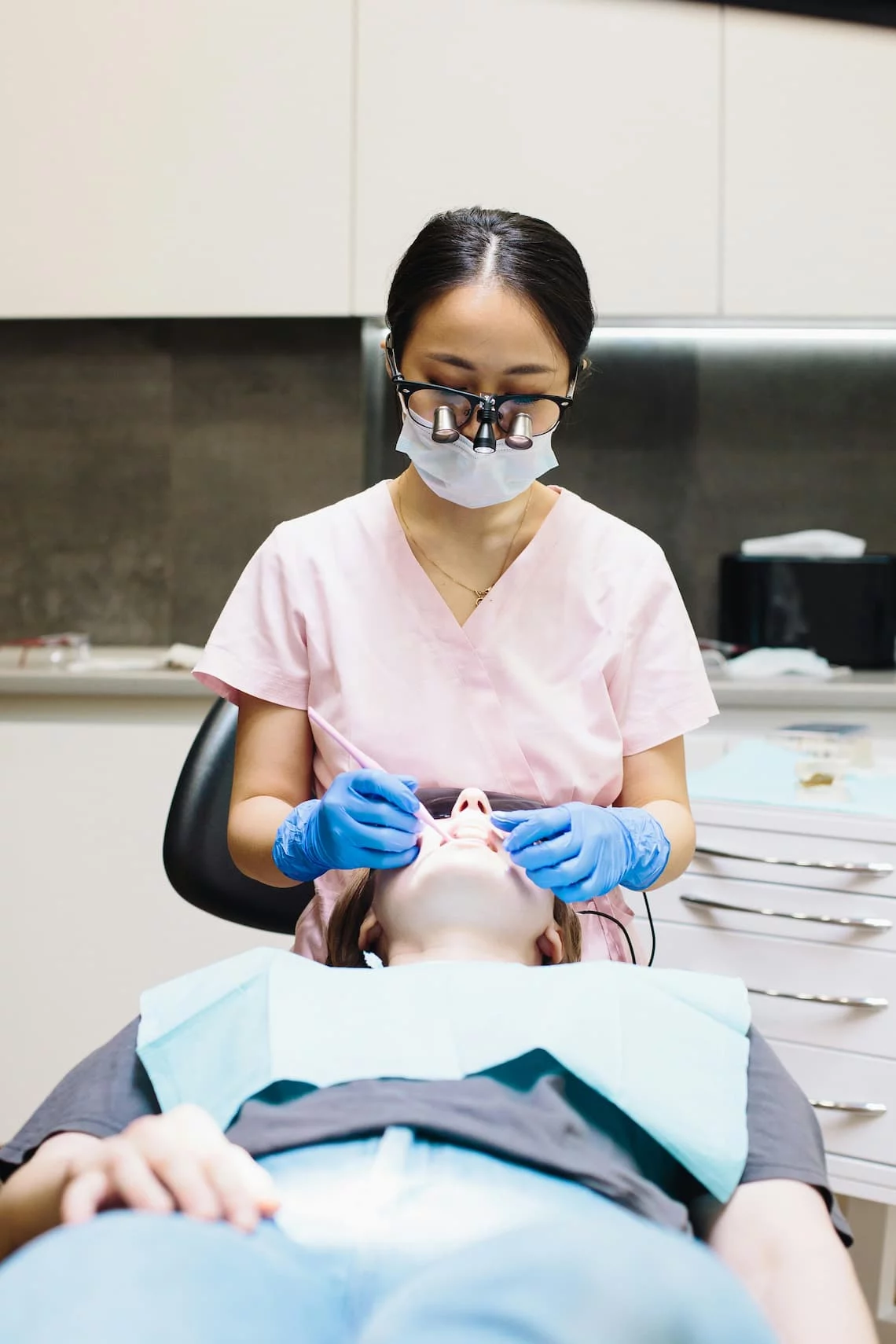
Dr. Mira Adair Picked Open Dental Specifically to Avoid Captive Payments. She Was Still Paying a Captive-Payments Rate.
The fastest way to reduce Open Dental payment processing fees has almost nothing to do with the software itself. It has to do with which payment partner you signed up with the day the practice opened, and whether the rate you agreed to back then bears any resemblance to what you should be paying today. Mira’s story is the version that played out for most Open Dental practices we audit.
Mira Adair runs a solo general practice in Asheville, North Carolina. Two operatories, one hygienist, a part-time assistant, and a front-office manager who has been with her since the practice opened in 2019. She picked Open Dental on purpose. She had spent her three associateship years in two different Eaglesoft offices and one Dentrix office and watched both practices get squeezed by integrated payment products they never quite chose — Eaglesoft Payments and Dentrix Pay had quietly become the default during her associate years, and the owners she worked for paid 2.8% to 3.4% on every patient transaction without ever really agreeing to it.
When Mira opened her own practice, she went to Open Dental for the same reason a lot of independent dentists do. Flat monthly fee. Open architecture. No “preferred” anything. Pick your own X-ray sensor vendor, pick your own imaging software, pick your own payment processor.
So when I pulled her last three months of merchant statements in February, the number we landed on surprised her: 2.96% effective rate. On $42,000 a month in card volume. Roughly $1,243 a month going to her processor — and roughly $440 of that was avoidable.
She had won the software fight. She had lost the processor fight without realizing she was in one.
Open Dental users tend to be deliberate, control-oriented practitioners who chose an open platform precisely to keep optionality. But because Open Dental doesn’t push any payment integration the way Eaglesoft Payments or Dentrix Pay do, the processor decision often gets made passively — the practice signs up with whoever the bank or a referred salesperson offered when the doors opened, and the rate never gets renegotiated. The platform freedom doesn’t automatically translate to processor freedom unless you act on it.
What Mira’s Processing Stack Actually Looked Like
Most Open Dental payment processing fees fall into one of three pricing buckets — tiered, interchange-plus, or flat-rate — and which bucket your practice landed in is usually decided in the first thirty days after opening. Open Dental’s billing module integrates with payments through their partner program — currently TSYS, OpenEdge, PayJunction, XCharge, and a handful of others. Practices can also process payments completely outside Open Dental and manually mark patient transactions as paid in the ledger. Mira had picked an integrated partner in 2019 because her front-office manager wanted card capture inside the software workflow. Fair call.
The pricing she signed up for was tiered: a “qualified” rate of 1.89% plus $0.15 per transaction, with mid-qualified and non-qualified surcharges layered on top for any card that didn’t hit the qualified bucket. In dental, that means almost everything ends up mid- or non-qualified — rewards cards, corporate cards from patients with HSA-linked employer plans, business cards, AmEx. Tiered pricing in dental is a setup for a high effective rate by design.
Six and a half years later, her practice had grown from ~$28K/month in card volume to $42K/month. The tiered structure hadn’t changed. The downgrades to mid- and non-qualified had quietly become the majority of her transaction mix. Her effective rate had drifted from the 2.6% range to 2.96%.
Where the $440 a Month Is Hiding
Three lines on Mira’s statement carried almost all of the avoidable cost. None of them are unusual. All three are standard tiered-pricing artifacts that an interchange-plus contract eliminates structurally.
Line 1 — Non-qualified downgrades on rewards and corporate cards. Her statement showed 38% of her volume hitting the “non-qualified” tier at 3.35%. The actual interchange cost on those cards (mostly Visa Signature, Mastercard World, and AmEx OptBlue) ranges from 2.10% to 2.40% — meaning her processor was capturing roughly 95 basis points to 125 basis points of pure spread on every downgrade. On her $42K volume, that 38% non-qualified bucket is about $16,000. The spread above true cost: roughly $160/month.
Line 2 — Mid-qualified downgrades on debit and standard credit. Another 31% of her volume hit “mid-qualified” at 2.59%. Many of these were regulated debit cards (Durbin-capped at 0.05% + $0.22 — yes, really, 5 basis points). The spread there was even larger in percentage terms: roughly $135/month captured on transactions that should have cost her almost nothing.
Line 3 — Statement-fee bundle. $19.95 PCI fee, $9.95 statement fee, $14.95 “regulatory compliance” fee, $7.50 batch fee. Total: $52.35/month. A real interchange-plus contract at her volume should have one statement fee in the $5-15 range and pass the PCI compliance fee through at actual cost ($7.95 from most QSA-validated vendors) only if PCI compliance isn’t bundled. The bundled-fee spread: roughly $35/month.
Sum: $160 + $135 + $35 + miscellaneous batch and AVS fees = ~$440/month in spread her processor is capturing above true cost. Annualized: $5,280.
Tiered pricing was originally a simplification — three buckets instead of 100+ interchange categories. In 2026, it’s almost always a markup-hiding mechanism. The processor decides which transactions get “downgraded” and by how much. In a true interchange-plus contract, you pay the actual interchange Visa or Mastercard charges your processor plus a fixed markup you agreed to in writing. The bucket math disappears. So does most of the spread.
Why Mira’s Situation Is Easier to Fix Than Eaglesoft or Dentrix Practices
This is the part that matters strategically. A dental practice on Eaglesoft Payments or Dentrix Pay who wants to lower their processing cost has to either accept that they’re paying the integrated-payments tax for the workflow benefit, or change their entire payment workflow — separate terminal, dual-entry into the software ledger, training the front office on a new flow. It’s a real trade-off and a lot of practices stay put because the workflow disruption isn’t worth the savings.
Open Dental practices don’t have that trade-off. The integration is a partner program, not a captive product. Switching processors means switching to a different Open Dental partner — same workflow, same in-software card capture, same patient ledger reconciliation. The front office sees almost no change. The integration list changes monthly, but as of writing, Open Dental’s payment partners include several true interchange-plus shops alongside the legacy tiered processors.
For Mira, the actual playbook to reduce Open Dental payment processing fees came down to four options, in roughly this order of impact-per-effort:
- Switch to an Open Dental-integrated interchange-plus processor. Keep the in-software workflow, lower the rate. This is Path 1, and it’s what she ended up doing.
- Move payments outside Open Dental entirely and use a flat-rate processor like Stripe Terminal or Square. Front office captures cards on a separate device, then marks the ledger paid manually. Works for very small practices but adds reconciliation friction at her volume.
- Implement dual pricing or a cash discount program. Pass the card-acceptance cost to the patient who chose to pay by card; reward patients who pay by check or cash. Substantively reduces card costs without changing processors. Compatible with Open Dental’s workflow.
- Move large patient balances to ACH. For implant, ortho, and full-mouth rehab patients with treatment plans over $3,000, set up Open Dental’s ACH option through the same partner or a separate ACH-only provider. ACH costs 0.5% to 1.0% all-in; card costs 2.5% to 3.5%. The savings on a single $8,000 implant case is roughly $200.
Because Open Dental’s partner model includes interchange-plus processors directly, you can get the rate reduction without changing your workflow at all. The friction that keeps Eaglesoft and Dentrix users locked into captive payments doesn’t apply here. Paths 3 and 4 are still worth running in parallel — dual pricing handles the routine card mix, ACH handles the large-ticket cases — but Path 1 alone solves most of the spread.
How Dental Practices Eliminate Card Processing Costs Entirely
The two highest-impact ways to reduce Open Dental payment processing fees are switching from tiered to interchange-plus and implementing dual pricing. We covered the first above. The second is the option Mira didn’t initially consider, and the one most dental practices skip on because they assume patients will react badly. The data says otherwise — and for high-AOV practices like hers, the math becomes hard to argue with.
Dual pricing displays two prices: a cash price and a card price. The card price is higher by the cost of card acceptance, typically 3% to 4%. Patients see both prices and choose. Patients who pay by check, ACH, HSA debit (which is interchange-capped), or cash pay the cash price. Patients who choose to pay by credit card cover the cost of doing so.
For a solo practice doing $42K/month in card volume, a dual-pricing program that successfully shifts 30% of patients to non-card payment methods saves about $370/month on processing costs alone. For practices with higher ticket sizes — implant, ortho, cosmetic — the savings scale almost linearly because patients are more sensitive to the card-vs-cash price difference on a $4,000 procedure than they are on a $180 cleaning.
| Pricing Model | Effective Cost on $42K Volume | Annual |
|---|---|---|
| Current tiered (2.96%) | $1,243/mo | $14,920 |
| Interchange-plus (~2.30%) | $966/mo | $11,592 |
| Interchange-plus + dual pricing (30% shift) | $676/mo | $8,112 |
| Dual pricing alone (existing processor) | $870/mo | $10,440 |
Three reasons dual pricing fits dental specifically:
- The HSA/FSA conversation is already happening. Dental front-office staff already discuss payment methods with every patient — what FSA covers, whether HSA debit works for a given procedure, whether the patient wants to split the balance across a card and cash. Adding “the cash price is lower” to that conversation is almost frictionless.
- Treatment plan presentation already includes price comparisons. Dental presentations frequently show “if you pay today vs. next month” or “if you do the full plan vs. one quadrant” pricing scenarios. The patient is already in a price-comparison mindset when they’re at the checkout. Showing the card vs. cash price is a natural extension.
- Treatment values are visible. A patient looking at a $6,200 implant case who sees “$6,200 cash / $6,386 card” notices the $186 difference. They notice it. Some pay cash. Some still pay by card and accept the cost. Either outcome saves the practice money — either fully eliminated card cost or unchanged card revenue with the cost shifted off the practice.
Dual pricing (showing two prices) is a different mechanism than surcharging (adding a fee to the card price) and is legal in every state. Surcharging has state-by-state restrictions; dual pricing does not. For dental specifically, the patient is paying the price they see — there’s no surcharge added at checkout. The Open Dental ledger captures the price actually charged, with no separate fee line. This is the cleanest model for healthcare billing and the one most practices end up adopting if they implement any kind of card-cost passthrough.
What to Look For in an Open Dental Payment Partner
Not every Open Dental-integrated processor is the same. The integration list is broad, and “integrated with Open Dental” doesn’t tell you anything about the pricing model — the actual Open Dental payment processing fees you’ll pay depend entirely on the contract you sign with the partner, not the integration itself. Before signing with any new partner, the four things to verify in writing:
1. Pricing structure: interchange-plus, not tiered. Ask for a sample statement, not a marketing rate sheet. The statement should show the actual interchange line items separately from the processor markup. If you see “qualified / mid-qualified / non-qualified” anywhere on the statement, walk away.
2. Fixed markup in writing. The interchange-plus markup should be a single number, expressed as basis points plus per-transaction fee. Example: “Interchange + 25 basis points + $0.10 per transaction.” Anything more complicated than that is hiding something.
3. PCI compliance handling. Ask whether PCI compliance is included or billed separately. If it’s separate, ask what the assessment process is. Dental practices using cloud-hosted Open Dental with point-to-point encryption (P2PE) terminals qualify for SAQ B-IP or SAQ A-EP depending on the setup — the easiest forms of PCI compliance to maintain.
4. Equipment ownership, not lease. Open Dental’s partners include some who lease terminals at $35-65/month for hardware that costs $400-600 to buy outright. The lease math is brutal — a four-year lease at $45/month is $2,160 for a $500 terminal. Always buy.
The integration list is curated by Open Dental for technical compatibility, not by pricing model. A partner can be on the integration list and still sell tiered pricing, leased terminals, and bundled fees. The integration tells you the workflow will work; the contract tells you what you’ll pay. Read the contract.
The Eight-Week Path From 2.96% to 2.04%
Mira ran the analysis in February. We pulled three statements, identified the spread, ran the interchange-plus math against her actual card mix, and built a side-by-side projection. She moved processors in March to an Open Dental-integrated interchange-plus partner with a flat 25-basis-point markup plus $0.10 per transaction. Standard interchange-plus contract, month-to-month with no termination fee.
The transition took about three weeks. New merchant account approval, terminal delivery, Open Dental integration setup with the new partner’s developer support, front office training. The old processor was given 30 days’ notice; her practice ran both accounts for two weeks during the transition to verify the new flow worked.
April statement: 2.04% effective rate on $44K volume. Roughly $898 in processing costs, down from $1,243 on similar volume in February. Savings: $345/month, or $4,140 annualized.
She hasn’t implemented dual pricing yet. We discussed it as a Phase 2 conversation — let the new rate stabilize for two or three statement cycles, then decide whether the additional $290/month of savings is worth the front-office workflow change. Many practices wait six to twelve months before adding dual pricing on top of a processor switch. Some never add it and accept the interchange-plus rate as the new floor.
If you picked Open Dental on purpose, you’ve already made the harder decision. You rejected the captive-payments model at the software layer. Carrying captive-payments pricing at the processor layer undoes most of what that choice was supposed to give you. The processor switch is mechanically straightforward inside Open Dental’s partner ecosystem. The savings on a typical solo or small-group practice is between $300 and $700 a month at current rate levels — money that goes directly to the bottom line because there’s no offsetting cost or workflow disruption to absorb.
Mira Adair is an illustrative composite. The fees, contract terms and mechanics described here are real and documented elsewhere on this site — the person and the business are not. Brookside does not publish real clients’ statements, which is why the sample statement review is a composite too.
Frequently Asked Questions
No, as long as the new processor is on Open Dental’s integrated partner list. The integration uses Open Dental’s standard payment API — your patient ledger, card-on-file, and recurring payment workflows continue to function identically. The change is invisible to the front office after the first day of training. If you’re considering a processor not on the integration list, the question becomes whether you want to give up the in-software workflow, which is a separate trade-off.
Look at your most recent merchant statement — this single document tells you almost everything about your Open Dental payment processing fees. Tiered pricing statements show buckets labeled “qualified,” “mid-qualified,” and “non-qualified” with three separate rates. Interchange-plus statements show individual interchange line items — usually 30 to 80 distinct lines for a typical dental practice — followed by a separate “markup” or “discount” line showing your processor’s spread. If the statement is hard to read with line items everywhere, it’s interchange-plus. If it’s clean with three buckets, it’s tiered.
Either order works mechanically, but most practices find it easier to switch processors first, let the new interchange-plus rate stabilize over two to three statement cycles, and then add dual pricing on top once the team is comfortable with the new workflow. Implementing both changes simultaneously increases training complexity and makes it harder to attribute savings to either change. Sequencing the switches three to six months apart gives you cleaner data on what’s working.
Send Us One Recent Statement. We’ll Tell You Where Your Spread Is Hiding.
If you run Open Dental and you’ve never had your merchant statement audited line by line, you almost certainly have $200 to $600 a month of recoverable spread sitting in your tiered downgrades and bundled statement fees. Send Brookside one recent statement and we’ll show you exactly how to reduce Open Dental payment processing fees on your specific card mix — we calculate your true effective rate, identify which lines are spread above interchange, and show you what an interchange-plus contract with an Open Dental-integrated partner would actually cost. The math takes us about fifteen minutes. Learn more about payment processing consumer protections from the CFPB.
Send Your Statement for Free ReviewNo obligation • No pressure • Response within one business day
See what a statement review looks like →